Showing posts with label EASTER. Show all posts

Sunday, 7 May 2023

FIFTH SUNDAY OF EASTER, YEAR A. MAY 7, 2023


 We pray through the graces of this holy Mass, that we understand what the resurrection of Christ has done for us; making us living stones of a spiritual edifice, a holy people whom God has acquired to proclaim his wonderful deeds, and so help us to pass from darkness to his marvelous light. Happy Sunday!

DOCTRINE AND FAITH

Acts 6,1-7; Psalm 32 (33); 1 Peter 2,4-9; John 14,1-12; Year A, 5th Sunday of Easter, May 7, 2023)

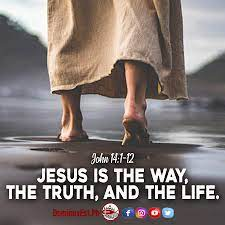
We have been called by God to pass from darkness to his marvelous light. Peter reminds us of this in his First Letter, stating also that this call makes us living stones of a spiritual edifice, a holy people whom God has acquired to proclaim his wonderful deeds (1 Peter 2,9). The faith that Jesus asks us to have, to overcome every disturbance and fear, has this quality, and it does not concern only him, his identity, and the Father who reveals himself in him but also tells us whom we must become, in obedience to his word and docility to the Spirit.

The liturgy today makes us listen to the first part of chapter 14 of John. It is worth recalling some verses. Jesus' words open with a great promise: When I have gone and have prepared a place for you, I will come again and take you with me, so that where I am, you also may be (John 14,3). Towards the end of the chapter the perspective is reversed: Whoever loves me will keep my word, and my Father will love him, and we will come to him and make our home with him (John 14,23). The abode that he prepares with his Passover, is within us. And we truly become God's temple and his spiritual building, as Peter affirms. Jesus is the way also in this sense: for through him we go to the Father, but always through him the Father himself comes to make his abode in us. We discover then that the truth is no longer an idea to grasp, some knowledge to possess: it becomes rather an open space in which to live, a vital environment in which to build one's home to dwell, a road on which to walk. Pope Francis often recalls this: rather than preserving doctrines, it is necessary to start


processes of maturation in the truth. For John, the truth is a person: it is Jesus, as the full revelation of the mystery of God and unveiling, equally full, of our human face. Truth is that communion of love that exists between the Father and the Son, into which the Spirit introduces us: When he comes, the Spirit of truth, he will guide you into all the truth (John 16, 13). It is as if Jesus said: the Spirit will lead you into the truth that I am, into that truth which is my communion of love with the Father: in that space, you too can live and thus find life. Paul understands well that this is the quality of authentic faith. How many times does the expression of Christ resound in his letters? Yes, because with his Easter, in the mystery of his resurrection, Jesus has become a space in which to stay, breathe, and mature to bear the fruit of life. It is the body of which we are members, the vine in which to remain grafted, the dress in which to let ourselves be covered. How can we fail to remember the cry that echoes at the heart of the Letter to the Philippians, which reveals the profound desire of his life:  to be given a place in him (Jesus Christ) with the righteousness that is not derived from Law, but that which comes from faith in Christ, the righteousness that comes from God, based on faith (Phil 3,9). Here the ancient question that starts from Genesis and runs through all the Scriptures is answered: Adam, where are you? Man, where are you? (cf. Gen 3,9). Now, we can answer, without shame, even in the nakedness of our sin: I am in Christ! This is our place, to which he, as a way, leads us, because here we find not only God's truth, but our truth, and we can truly live by it. Christ is the space of life, and Paul recalls it: dwelling in him we know the power of his resurrection (cf. Phil 3,10). Being in him, the Apostle always teaches us, sharing what he feels about him (cf. Phil 2,5). By saying to Philip “Whoever has seen me has seen the Father” (John 14,9), Jesus reminds his disciple, and all of us, that seeing him means knowing the Son, and therefore discovering a filial way of relating to the Father. Only by sharing his filial feeling can we encounter not a generic God, but the face of the Father. To know the Father it is necessary that he reveals himself in the Son (who is one with him), but it is equally necessary that we too assume an authentic filial attitude. If we remain servants we will know God as a master, certainly not as the Father. No one knows the Father except the Son and anyone to whom the Son chooses to reveal him (Matt 11,27). And the Son reveals it to us by inviting us to learn from him, to assume his yoke, no longer that of the Law, but that of the filial condition. By sharing his feelings, we can get to know the Father and become a temple of the Spirit, so that, filled with his wisdom, we can also face new situations, such as the one created in the community of Jerusalem, according to the account in the Acts. The Apostles cannot remember a clear word of Jesus that helps them to face the problem, there isn't one: they are full of his Spirit who guides them to make the right decisions. Then the difficulty or obstacle turns into a propitious occasion for the growth of the community.

May the Lord give us the same attitudes, to transform even today's problems into opportunities in which the Spirit can once again speak his words of wisdom. If we abide in him and he in us it will be possible. + John I. Okoye.

(graphics  by Chukwubike)


Sunday, 30 April 2023

FOURTH SUNDAY OF EASTER YEAR A, 30TH APRIL 2023

 
We pray through the fruits of this Holy Sacrifice, that we receive the grace to always fix the gaze of our mind and heart on Jesus, the good shepherd. It is He who will transform our life through the glory of his resurrection. Happy Sunday!

DOCTRINE AND FAITH

(Acts 2,14a.36-41; Psalm 22 (23); 1 Peter 2,20b-25; John 10,1-10; 4th Sunday of Easter, Year A, April 30, 2023)

In the heart of the Easter season, the liturgy invites us, every year, to fix the gaze of our mind and heart on Jesus, the good shepherd. More exactly, he is the beautiful shepherd, as John defines him in his account. Beautiful in the sense of an exemplary shepherd, and therefore true, reliable, credible. In Greek - the word which the evangelist rendered - beautiful is kalos, a term built on the same root from which the verb “to call” (kaleo, in Greek) comes. It is a verb on which all of today's biblical readings seem to insist.

In the Gospel, John writes that the handsome\good shepherd calls his sheep, each one by his name, and leads them out (John 10,3). And the sheep, recognizing his voice, listen to him and follow him. They can do this because they recognize that it is not only the sound of his voice that calls them but also the beauty of the shepherd, the beauty of his life. The sheep know his voice not only in the sense that they know how to distinguish it from other voices - such as those of thieves, brigands, or mercenaries -, they also know it more deeply. They listen and understand that it springs from a beautiful\genuine life that it is totally delivered\donated, like gift, in love, so that all of them could have life, and have it in abundance. In the passage that we read this Sunday, the evangelist alludes to this, but he says it more clearly only in the verses that immediately follow: The good shepherd lays down his life for his sheep (John 10,11; cf. also John 10, 15.17-18). This is the beautiful shepherd that calls the sheep and the sheep know how to listen to, recognize and follow and allow themselves to be attracted by him. He is no other than the one (as Peter recalls in his First Letter) who suffered for you and who bore our sins in his body, on the wood of the cross (1 Peter 2,21.24). By his wounds, we have been healed! Healed and transformed, this is so because letting oneself be attracted by the voice of this shepherd means, Peter insists, accepting his example and following in his footsteps. And here, in the context of this letter, the verb to call still resonates strongly: To this you were called (1 Peter 2,21), that is, to do good, even at the cost of having to bear with patience some unjust punishment (1 Peter 2,20). However, this is not just any kind of patience, much less painful or passive patience. It is rather the patience of love that continues, with perseverance, to love and to do good, even when faced with adversity, misunderstanding, and hostility, which often expose one to violence and rejection.

What are we to do, brothers? (Acts 2,37), the crowds of Jerusalem ask in the Acts. Repent … (replies Peter) for the forgiveness of your sins, and you will receive the gift of the Holy Spirit, for the promise is for you and for your children and for all those whom the Lord our God is calling to himself (Acts 2,38-39). Converting doesn't mean adjusting one's life and behavior a little. There is a more radical transformation that is required of us: to truly believe in God's promise, which preserves his desire to make us, through the gift of the Spirit, more like his Son. Receiving baptism in the name of Jesus Christ in fact means, in addition to accepting the forgiveness of sins, allowing oneself to be clothed by him, so that the beauty of his life may radiate and shine through in our existence as well. Also in Acts, in Peter's words, the verb “to call” resounds brightly as the Lord calls people to himself. (Acts 2,39). The Lord calls us to believe in this promise: in the Spirit we are given through whom we are clothed with the very beauty of the handsome shepherd whose voice we recognize and whom we follow with trust. He, John reminds us, that Jesus is not only the shepherd but also the door. In the temple of Jerusalem, there was a door designated of the sheep, through which the animals were led to be sacrificed. Now, Jesus solemnly affirms that he is the true door, but a different door, because it does not lead inside, towards sacrifice, but outside, towards communion with the Father, interwoven no longer with observances, precepts, sacrifices, yokes, and heavy burdens to carry, but with mutual knowledge in love. The shepherd calls his sheep by his name, because he knows them one by one; the sheep follow him because they know his voice. Now, it is mutual knowledge (a sign of a profound communion in love) that becomes the sole foundation of the relationship with God. And the sheep must no longer be led to sacrifice, because it is the shepherd himself who gives them life, in abundance, through the gift of his own life. It is the shepherd (no longer the sheep) who passes through the door, making himself a lamb, and a sacrificed lamb. Among the negative figures to whom Jesus controversially contrasts himself, there are not only thieves and brigands but also strangers. Now, every extraneousness that could characterize our relationship with God is demolished: mutual knowledge and communion in love are possible and are implemented in the gift of himself. The shepherd comes to give us his life and this gift, which precedes us, allows us to listen to his voice and to let ourselves be called by him, in turn giving our lives to him and to our brothers and sisters. It is in this mutual exchange, of a gift that is accepted and paid for, that we can savor life, and life in abundance for that matter, letting the beauty of him shine through. 

+ John. I. Okoye.

(graphics  by Chukwubike OC)

Sunday, 9 April 2023

Easter Sunday, Year C, April 9, 2023


We pray in this Eucharist, that the risen Lord gives us grace, so that as we have died with him through our Lenten observances, we may also rise with him at Easter. Happy Easter!

DOCTRINE AND FAITH

(Acts 10,34a.37-43; Psalm 117 (118); Col 3,1-4 (1 Cor 5,6-8); John 20,1-9; Easter Sunday, Year C, April 9, 2023)

The choice of the liturgy which offers us only the first nine verses of the twentieth chapter of the Gospel of John is surprising. The account seems to stop at the most beautiful part because immediately after it, Evangelist John will recount the meeting of the Risen One with Mary of Magdala. And this is strange, all the more so, since the Sequence of the Mass, that is sung before the proclamation of the Gospel questions precisely Mary's experience: Tell us, Mary: who did you see on the way? What is the reason for this choice?  What sense can it have for us to listen to this page which tells us about the faith of the beloved disciple, who runs to the tomb together with Peter? Both enter the tomb and see the same things, but it is only of the other disciple, the beloved one, that it is stated that he saw and believed (John 20,8). And it is precisely on his experience of faith that the liturgy invites us today to pause our gaze. After all, this disciple's experience of faith is more similar to ours than that of the Magdalene. In fact, Mary heard herself called by name, she saw the Lord, she was able to hear him. Instead, what did this disciple see? Not the Lord, like Mary, but only signs: an empty sepulcher and cloths that had served to wrap the lifeless body of Jesus, left lying there (John 20,6), or rather collapsed there, because the body they had wrapped up was gone. The disciple sees only signs, yet they are enough for him to believe.

We are in the same condition as him: we believe not because, like Mary, we have heard and seen the Lord, but only because there are signs that make us pass from disbelief to faith. Precisely at the end of this chapter, Jesus will say it to Thomas, announcing to him the beatitude of faith: “Because you have seen me, you have believed; blessed are those who have not seen and have believed!”  (John 20,29). Such is the faith of the beloved disciple, which he believes even before personally meeting the Risen One. Signs are enough for him, as long as they are seen by listening to the word of God, opening his ear to the testimony of the Scriptures, of those Scriptures which, until then, he has not even understood and which, then, he is only beginning to understand in a new way. It is necessary to listen to see, and to see in a different way.

On this page of the gospel of  John, all the characters who enter the scene, see. But their seeing differ. Mary sees that the stone had been removed from the tomb. Her seeing, blepo in Greek is a verb that indicates bodily, physical, natural seeing; seeing with one's physical eyes. Peter too, a little later, sees or rather observes the clothes placed there (John 20,6). The verb used here is theorem from which the English term theory is derived. It is a more reflective way of seeing, in which one reasons, investigates, and questions itself. It is seeing not only with the eyes but also with the head. Peter sees and reasons, but does not come to understand. To believe it is not enough to see and reason.  Finally, it is the beloved disciple who sees and whose seeing gives rise to belief: He saw and believed (Jn 20,8). Here the verb changes again; this time and now, it is seeing not only with the eyes, like Mary, or with reason, like Peter, but it is a deeper seeing, with the heart one could say. The verb orao, used to indicate the seeing of John, is used of someone who has continued to dwell in the love of the Lord and to let himself be penetrated by this love as the entire narrative of the passion shows. It is the seeing of one who preserves the word of Jesus and lets himself be influenced by it, thus remaining in his love. Deep down, both Mary and Peter and this disciple see the same things: they see signs, but their way of looking is very different. It is, however, to be noted that these three verbs of seeing are not mutually exclusive, they should all necessarily be connected. One level of meaning should give rise to a better and more profound sense. What you see with your eyes must arouse a search, a reflection, it must lead to reason, to question, to investigate. This research must in turn go beyond itself; it cannot remain only in the horizon of reasoning. It must refract and resound in the depths of our interiority, in the deepest areas of our being, where there is not only our way of reasoning but where God himself lives; where the Spirit of him offers us a different perception of reality, attracts us, and convinces us. His is an inner persuasion that we don't know exactly where it comes from, but we still feel more convincing and reliable than any other truth to which we can come by trusting only in our efforts. And then, precisely at the intersection of these three verbs, of these three ways of seeing, faith is born: one sees and one believes.


Yes, Lord, we love you; but before that, we feel loved by you with a love without measure. And we remain in this love in which everything becomes a sign. The word we have heard, the bread we break in your memory, our being gathered in the joy of Easter, our friendship, the sun that illuminates this day just as the Paschal candle has illuminated our night: everything becomes a sign of your presence, alive and resurrected, among us. Yes, Lord, we love you. And by loving you, and knowing that we are loved by you, we too see and believe. + John I. Okoye

graphics  by Chukwubike OC

Sunday, 18 April 2021

3rd Sunday of Easter, Year B, April 18, 2021

May the Risen Christ bestow on us today, the gift of total conversion to God and the forgiveness of all our sins.

                  Happy Sunday!


May the Risen Christ bestow on us today, the gift of total conversion to God and the forgiveness of all our sins.

Happy Sunday! 

DOCTRINE AND FAITH

(Acts 3,13-15.17-19; 1 John 2, l-5a; Luke 24, 35-48; 3rd Sunday of Easter, Year B, April 18, 2021)

DOCTRINE AND FAITH
(Acts 3,13-15.17-19; 1 John 2, l-5a; Luke 24, 35-48; 3rd Sunday of Easter, Year B, April 18, 2021)

Today the liturgy continues to speak on the resurrection of Christ particularly manifestation (of the Risen One to the apostles in the Upper Room). The first reading is a part of Peter's discourse after the healing of the cripple, in which he proclaims the resurrection of Jesus. The theme common to the texts of today's liturgy is that of the remission of sins, which is obtained for us by Jesus’ passion and offered to us by the Risen One.

The Gospel leads us back to the Upper Room, where Jesus was manifested to the Eleven, addressing them, first of all, with this greeting: Peace be with you! As in the Gospel of John (20,19.21.26), the Risen One brings peace to us, precisely, because he gives us the remission of sins, reconciliation with God. Luke recounts this episode with great emphasis on the realism of the resurrection. In fact here, it is not simply a question of an apparition of the soul of Jesus, but his true manifestation with his risen body. Jesus realises that the apostles were troubled and were not convinced by the sight of him, because they have no idea of the resurrection: they think it is impossible. This is why Jesus tells them: Look at my hands and my feet: it is really me! He shows his wounds as marks of his identity. He does not say: Look at my face!; but: Look at my hands and my feet: it is really me! Touch me and look. The disciples think they see a ghost, but the risen Jesus is not a ghost: he is a man with body and soul. On account of this he says to the disciples: Touch me and look; a ghost has no flesh and bones as you see I have. And since this does not seem to be enough, he asks them: Do you have anything here to eat? The disciples offered him a portion of fish; Jesus takes it and eats it. Jesus' persistence on the realism of his resurrection illuminates the biblical perspective on the body. This is a very different perspective from the Greek one. The Greeks had arrived at the affirmation of the immortality of the soul, and this had undoubtedly constituted a great advancement in philosophical thought. But they regarded the body as an obstacle to the soul. For some even, the body was like a tomb or a prison for the soul. The body is a burden for the soul; therefore, the soul must free itself from it, and only in this way can it reach its full dignity. The biblical perspective, on the other hand, is very different. According to the Bible, the body is created by God, and man is not complete if he is not a union of body and soul. Therefore, Jesus' victory over death does not consist of his remaining united with God with his immortal soul, but again receiving his body united with his soul, in an existence that is obviously very different from our earthly existence. Thus, the victory over death is truly complete: Jesus is risen body and soul. This makes us understand that we must have a very positive idea of our body. It is true that the body can be an occasion for sin for us; in reality, sin is not caused by the body, but by our psychological and moral weakness. The body itself is a magnificent tool that God has placed at our disposal so that we can live our life to the fullest. And we must have great respect for it, because it was created by God. We must take care of it in a balanced way, and truly recognize that man is not complete if he is not a union of body and soul. After showing the disciples that he was truly risen with his body, Jesus, to find out the depth of their faith, refers to the words he had said before his death, and precisely, from the word of God in the Old Testament: These are the words that I was mentioning when I was still with you. These words referred to the prophecies: All the things written about me in the Law of Moses, in the Prophets and in the Psalms must be fulfilled. Here Jesus mentions the three parts of the Old Testament: the Law, the Prophets and the Writings. We can recognize the Risen One only if we have assimilated the teaching of the Bible and its predictions. Thanks Jesus’ words, who had predicted his sufferings, death and resurrection several times, we can recognize him as risen. Jesus’ words correspond to the predictions of the Old Testament. The risen one, in fact, says to the apostles: Thus it is written: Christ will have to suffer, rise from the dead on the third day and in his name conversion and the forgiveness of sins will be preached to all peoples, beginning with Jerusalem. Of this you are witnesses. The passion and resurrection of Jesus, as well as the fruitfulness that comes from them, had been foretold in the Scriptures. The mystery of Jesus is a mystery of reconciliation, which obtains conversion and the forgiveness of sins for all peoples. Jesus’ earthly mission was limited to the lost sheep of the house of Israel (cf. Matt 10,6), but after his passion and his resurrection the mission of the apostles extends to the whole world. The risen Lord affirms:  conversion and the forgiveness of sins will be preached to all people. This conversion and forgiveness are obtained through faith in the risen Christ.

In the first reading, Peter addresses the Jewish people, the people who had asked for the condemnation of Jesus on the cross. With strong words and insistence, the Apostle reminds them of this deplorable fact: You denied the Holy and the Righteous One; You handed him over and denied him before Pilate, who had the mind to free him; You killed the author of life. Thus, Peter arouses repentance and conversion in the hearts of his listeners. But at the same time, he shows divine mercy, saying: I know that you have acted out of ignorance, as did your leaders. Peter here mitigates the guilt of the Jews: they acted out of ignorance; circumstances made them blind; they did not know what they were doing, as Jesus himself said on the cross (cf. Luke 23,34). Peter then invites the people to repent, so that they may receive the forgiveness of sins: God has fulfilled what he had announced through the mouth of all the prophets, that is, that Christ would die. Repent therefore and change your life, so that your sins may be blotted out. It is a message of personal, spiritual resurrection, through repentance, conversion and the forgiveness of sins.

The second reading completes the teaching of the other readings, describing, in a more precise way, the situation of Christians after baptism, that is, after their adhesion to Jesus. They cannot and must no longer sin, because they have received the grace, the power of the resurrection, to, victoriously, resist all the forces of evil. However, human weakness continues to manifest itself in our Christian life and we can still fall into sin. John, however, continues to invite us to keep hope alive, saying: If anyone sins we have an advocate with the Father, Jesus Christ, the just One. Jesus is our advocate with the Father, and the instrument of forgiveness. Through his passion and resurrection, Jesus received the ability to offer forgiveness for sins and to purify souls from any sin. And this applies not only to our sins, but also to those of the whole world. The fruitfulness of Jesus' passion and resurrection has no limits: it is a mystery of salvation that has value for all peoples. Then John makes a statement that seems to be in contrast with the previous ones: From this we know that we have known him: if we observe his commandments. Whoever says: I know him and does not keep his commandments, is a liar. John insists on the need to observe the commandments, not to sin, to have an orientation in conformity with the Christian faith and the victory of Christ over all the forces of evil. We must, seriously, commit ourselves in this direction; otherwise, we are not in authentic relationship with Jesus, we do not know him. In the Bible, the term knowing means a very deep personal relationship with a person. Therefore, without a serious commitment to faithfulness to God's commandments, and Jesus' commandment to love one another, it is not possible to, truly, be Christians, it is not possible to have an authentic, profound relationship with Jesus. Thus, it becomes clear that the   Christian's situation cannot be a situation of resignation to sin. It is always possible for him to commit faults, but these must not be his normal attitude. His basic attitude must be that of the faithful observance of God's commandments, especially that of charity. Whoever follows an orientation different from this one, is not truly Christian, places himself outside Jesus’ influence, and grace, and moves towards perdition. We must distinguish the basic attitude and faults well: they are two really different things. The basic attitude of the Christian must be faithfulness to the Lord. However, despite this attitude, we can be faulty due to human frailty. Then we have Jesus as our advocate, who obtains forgiveness for us. However, we do not obtain this forgiveness if our basic attitude is characterised by vice and selfishness, which means, concretely, denying the faith. If our basic attitude is bad, we cannot be united with Jesus.

Today the liturgy invites us to strengthen our fundamental attitude of faith in the risen Christ, of faith in his victory over all the forces of evil, and adherence to his saving will. Jesus wants to communicate to us his victory over evil and make us progress in his love. We must  therefore, develop this basic attitude, knowing that it is essential for our Christian life. +John I. Okoye

(graphics  by Chukwubike OC)

Saturday, 10 April 2021

2nd Sunday of Easter, Year B, April 11, 2021

May the Risen Lord bestow  on us also his Easter gifts of peace, joy and Holy Spirit, may he also enable us by his grace to witness  his resurrection through active faith in him and deep charity coming from transformed hearts.

                              Happy Sunday

DOCTRINE AND FAITH

(Acts 4, 32-35; 1 John 5, 1-6; John 20, 19-31: 2nd Sunday of Easter, Year B, April 11, 2021)

On this Sunday, the Gospel refers to a first apparition of the risen Jesus to the disciples in the Upper Room on Easter evening, and another apparition that takes place eight days later. The doors of the Upper Room were closed for fear of the Jews. The risen Jesus appears in the midst of the disciples, despite the closed doors, and the first word he addresses to them is very significant. He could have scolded them harshly, because they all abandoned him and Peter even denied him; instead, he says to them: Peace be with you! This is the peace that comes after victory. Jesus conquered evil and death, hatred and all selfishness; therefore, it can bring us reconciliation and peace. Instead of rebuke, he addresses the disciples with a wish for peace. Then he shows his hands and side, that is, the wounds with which he obtained the victory. They are the wounds that testify to the sufferings he endured with love, in order to overcome, precisely through love, evil and death. The disciples then rejoice seeing the Lord. The risen Jesus also brings joy to the disciples. This is the joy of his victory, the joy above all for his love, which defeated our selfishness and our wickedness, Jesus makes the disciples sharer in his victory. Then he repeats his wish: Peace be with you! He then  gives his disciples a task: As the Father has sent me, so am I sending you. Jesus’ resurrection is not an individual benefit, which concerns only him, but it involves us all. He communicates his new life to us: a life of intense love, which is meant to transform the world. Risen Jesus entrusts missions/assignments to be carried out to people:  Mary Magdalene, some women, and now the apostles. To bestow the strength necessary to carry out this mission, which is the continuation of his mission, Jesus gives the Holy Spirit: Receive the Holy Spirit. Thus, the evangelist makes us understand that the Holy Spirit is a gift from the Risen One, a gift that Jesus obtained for us with his victory over death. This gift was most, sensationally, manifested on Pentecost; but even then Peter will declare that the Holy Spirit was obtained by Jesus with his resurrection and passed on to us (cf. Acts 2, 32-33). Therefore, Jesus’ resurrection is an immense benefit for all of us: it is the new life of Christ - life in the Spirit - which is bestowed on us and meant to transform our whole existence. At the end of this episode the evangelist points out that Thomas was not with the other disciples when Jesus came, and that he does not believe their words. They tell him: We have seen the Lord! Thomas declares: If I do not see the sign of the nails in his hands and I do not put my finger in the place of the nails and I do not put my hand in his side, I do not believe». Thomas does not believe until after seeing. However, the condition that he poses is also inspired, because, in order to believe, he asks to see the sign of the nails and the wound on the side. Jesus had made himself known by the disciples by showing them his hands and his side. Therefore, his identity is now defined by his wounds, and the love they manifest. Jesus went to the extreme possibility of love, accepting unspeakable suffering for us, death itself and, after it, a wound in the side. It is from these signs that it is now possible to his suffering. Eight days later Jesus appears to the disciples again. He stops in their midst and says again: Peace be with you!
 Jesus never tires of bestowing his peace to the disciples, as he promised: Peace I leave with you, my peace I give to you (John 14,27). Then, turning to Thomas, he says to him: Put your finger here and look at my hands; stretch out your hand and put it in my side; doubt no longer, but believe. Jesus accepts the conditions set by Thomas, to overcome his incredulity. At this point Thomas declares himself defeated and expresses his purest and strongest faith towards the risen Jesus, saying: My Lord and my God! In the whole of the New Testament there is no confession of faith so profound, and perfect as that of Thomas. He recognises not only the messianicity of Jesus, but also his divinity. He receives this inspiration, thanks to his contact with the hands and the pierced side of Jesus. The heart of Jesus communicates to him a strong and profound faith. Jesus then says to him: Because you have seen me, you believe: blessed are those who have not seen, but believe. The teaching that was given to Thomas is to our advantage. This episode could make us think that in these apparitions of the Risen Lord the apostles were privileged, and therefore, could arouse some envy for the time they saw the risen Jesus in us. But Jesus says: Blessed are those who, despite not having seen, still believe. Thus, we are made to understand that faith puts us in a much more beautiful relationship with him, more profound than the physical vision of his risen body. In fact, our relationship with him must be that of faith. And the purer the faith, our relationship with him will be more profound and perfect. God has given us faith in his Son, and we must be happy and proud indeed. Faith is a wonderful gift from God, because it puts us in an intimate relationship with Jesus and, through him, with the Father, in the Holy Spirit. We must, therefore, be aware of the beauty and strength of our faith.
In the second reading John tells us that faith is our victory. Through it, we participate in Jesus' victory over the active world: This is the victory that defeated the world: our faith. Whoever, truly, believes in Jesus is a winner; he draws from him all the strength necessary to overcome the evil world, that is, to overcome all egoistic tendencies, the temptations of sin, and forces of hatred. Jesus came with water and blood, which flowed from his pierced side and manifest the fruitfulness of his sacrifice. When we contemplate Jesus in meditation, our faith grows and our victory becomes more and more complete.

The first reading makes us understand what Christian victory consists of. For the apostles it consists of having the courage to bear witness to the Jesus’ resurrection, as the Acts of the Apostles tell us: With great force the apostles testified to the resurrection of the Lord Jesus. During Jesus’ Passion, the apostles were fearful, and abandoned their Lord, Peter had not had the courage to accept his relationship with him. But after Jesus’ resurrection and receiving the gift of the Holy Spirit, they have the courage to bear witness to him before the authorities, despite all threats, and risking their lives for the sake of faith. Faith makes them victorious. This is the first aspect of the victory of faith: the testimony given to Jesus. The second aspect concerns charity. We read in the Acts of the Apostles: The multitude of those who had come to faith had one heart and one soul. This is perfect union in brotherly charity, through the love of Jesus poured into hearts by the Holy Spirit. This union is not only theoretical, but  manifests itself in a very concrete and visible way: No one kept to himself his property as belonging to him alone, but everything was made available to all for common use. This charity is truly an impressive victory of faith. In fact, we are all naturally inclined to be possessive and hardly accept to share our things with others. However, the early Christians had such a strong faith that they shared all their properties. The author explains that those who owned fields or houses sold them, brought the amount of what had been sold and placed it at the feet of the apostles; and then it was distributed to each according to need. The result was that none of them was needy. In the first communities the sharing of goods was practiced. Therefore, they lived an exemplary life, free from all selfishness and happy life, because no one was in need. We can then recognize that the risen Christ makes us sharer in his victory in two ways: with the witness of faith and witness of brotherly charity. We must therefore, ask the Lord to make us more open and available to the strength of faith, more courageous in bearing witness to it and more generous in practicing the charitable brotherhood, which was bestowed on us by the pierced heart of Jesus and his resurrection. +John I. Okoye

(graphics by Chukwubike)

Sunday, 10 May 2020

5th Sunday of Easter, Year A, May 10, 2020


May God grant us, this Sunday, the grace to welcome our Christian vocation with enthusiasm, confidence and courage, so that contributing to the growth of the church, we may be worthy of the peace and joy of the risen Christ, and equally, of a place in God's house.
Happy Sunday! 


DOCTRINE AND FAITH
(Acts 6: 1-7; 1 Pt 2,4-9; Jn 14: 1-12; 5th Sunday of Easter, Year A, May 10, 2020)

On this Sunday the liturgy offers us very beautiful texts. In the Gospel, taken from the discourse after the Supper, Jesus tells us that he goes to prepare a place for us in the Father's house and reveals the Father to us. The first reading shows us the organisation of the early Church and the way they dealt with the problems that were then arising. The second reading tells us about building the spiritual home for a holy priesthood.
What we can admire, first of all, in the Gospel is Jesus’ delicacy. He wished that the disciples' hearts should not be disturbed. The Passion was close. Jesus knew that this event was going to cause a great upheaval for the disciples, but he took care to preserve them from a prolonged disturbance, and said: Let your hearts not be troubled. Have faith in God and have faith in me too. Then Jesus showed his delicacy in the way he spoke of his passion, of the paschal mystery. It is a tragic, shocking mystery, but he presented it with familiar, simple, attractive images: I am going to prepare you a place in the Father's house; when I have gone and I have prepared a place for you, I will return and take you with me, so that you too may be where I am. It is a nice thing for Jesus to prepare a place for the disciples. But how will he prepare it? He will prepare it, precisely, through his sufferings, passion and, of course, his resurrection. Here we can understand that the place that Jesus prepares for us is in his tortured and then resurrected body. By now we are all members of his body, because he has prepared a place for us in it. We can say that the place that Jesus prepared for us is his heart. He allowed his heart to be pierced, because, in a certain sense, we could enter it, because this heart of his was given to us. We can, therefore, admire the delicacy of Jesus' love and, at the same time, his generosity, because the preparation of the place was a very expensive action for him. But an action performed with immense love. John says: After having loved his that were in the world, he loved them to the end (John 13, 1), that is, to the point of preparing a place for them. On the other hand, Jesus presented himself as the way to reach the Father. He says: About the place where I go, you know the way." Thomas asks him: Lord, we do not know where you are going and how can we know the way? Jesus replies: I am the way, the truth and the life. Again, we see that Jesus is all for us: He is the destination of where we are going, and at the same time the way by which we can reach the place. Infact, we must follow him as we follow a path and imitate him. We imitate him if we live in love, because Jesus is the way for he loves us till the end. Jesus shows generous love. This type of love is not easy to achieve. Love attracts us, but generous love frighten us, because it is costly. However, Jesus gave us the grace to go forward on this path of generous love with all the strength that comes from his passion and resurrection. Then Jesus explained that through him we can know the Father. Philip tells him: Lord, show us the Father and it is enough for us. Just as Moses asked God to show him his face, so Philip asked Jesus to show the Father. God replied to Moses: You will see my back, but you cannot see my face (Exodus 33,23). Direct revelation of God is impossible for man. But now we can see the face of the Father in the face of Jesus: Whoever has seen me has seen the Father, says Jesus. If we want to know God, we must contemplate Jesus: contemplate him for a long time, listen to him, and then follow him. In that way we know God better, and so God is revealed to us in his glory, which is a glory of love. The greatness and goodness of God are revealed to us by Jesus’ paschal mystery and his face. Jesus then told us a very surprising thing: those who believe in me, will perform the works that I do and I will make them greater, because I go to the Father. To understand this statement, one must also read the continuation of the sentence. That is, the next two verses of the Gospel: ... and whatever you ask in my name, I will do it, so that the Father may be glorified in the Son. If you ask me something in my name, I will do it. It is true that the disciples did more great works than Jesus, because Jesus limited his ministry to Palestine. In fact, only rarely did he leave there. The apostles extended their ministry to many nations; therefore, they did a broader work than Jesus. And the work of the Church continues to be a work broader than that of Jesus, but in reality the work of the Church is the work of Jesus himself, of the risen Jesus. This is how Jesus' discourse in the Gospel continues: Whoever believes in me, will do the works that I do and will do greater works, because I am going to the Father and whatever you ask in my name, I will do it, for the Father to be glorified in the Son. If you ask me anything in my name, I will do it (John 14, 12-14). Therefore, everything is the work of the risen Christ; the disciples are his instruments, provided that they pray. And all of us are called to carry out the work of Christ in a more modest but real way in our life. Every Christian has the vocation to do the work of Christ, in union with him through prayer and love. Therefore, we must have great ambitions in our lives; we must do divine works in union with Christ. In our life - family life, work life, human relationships - we must do a divine work and gradually transform the world according to the Father's plan, thanks to our prayer and union with Jesus in generous love.
All of these can be called priesthood, as Peter did in the second reading. He said to Christians:  hold on to Christ, a living stone, rejected by men, but chosen and precious before God, you too are used as living stones for the construction of a spiritual building, for a holy priesthood, to offer acceptable spiritual sacrifices to God through Jesus Christ. This is a splendid presentation of the Christian life! We are all called to cling to Christ, the living stone. The risen Christ is (as Ps 118,22 says) the stone rejected by men, which has become the cornerstone, because it was chosen, and precious before, God. In his paschal mystery he has become the living stone, which is the foundation of everything in the building. And whoever believes in Christ is also transformed into a living stone, for the construction of a spiritual temple, that is, a non-material temple, but animated by the Holy Spirit. The whole life of the Christian must become an offer to God, a priestly offer, because it is made to God through Christ. Peter calls these offerings spiritual sacrifices pleasing to God, through Jesus Christ. This is our Christian vocation: to offer spiritual sacrifices or, better still, to make spiritual offerings, because it is not about mostly painful, mortifying things, but about the normal activities of life, which are transformed thanks to our union with Christ who died but rose from the dead. The Apostolate of Prayer teaches its members to make the daily offering with this spirit, to be united with the paschal mystery of Christ. It is a question of offering our daily actions, so that our lives may be united to Christ, lived in divine charity. So, humbly, a splendid work was done, an inconspicuous work, that has a wonderful value before God.
In the first reading we saw how the spiritual building of which Peter spoke was built little by little. It is the Church. In the Acts of the Apostles we saw how difficult circumstances had helped to advance its construction. In the early Church there were Jews who spoke Hebrew or, rather, Aramaic - and other Jews who had been to the Hellenistic nations and spoke Greek. The latter are called the Hellenists. There were some rivalries between these two categories of Christians, and at some point discontentment arose among the Hellenists towards the Jews. Every day, there used to be a distribution of food for the widows, which at that time were numerous (men at the time did not have a long life). The discontentment was caused by the fact that, according to the Hellenists, their widows were neglected in this daily distribution.
Faced with this situation, the Twelve convene the group of disciples and established a division of apostolic work. They maintained for themselves the main responsibility, which is not the material one, but the spiritual one: It is not right that we neglect the word of God for the service of the canteens. The apostles must dedicate themselves to prayer and the ministry of the Word, because this is the main task of the Church. However, there were also material things to be organised. And then the Twelve propose to choose seven men of good reputation, full of the Holy Spirit and wisdom for the works of charity, Luke does not yet call them deacons, but they were, so to speak, the predecessors of the deacons in the Church. Thus this decision brought a solution to the problem that has arisen and constituted progress in building the Church. The text says: The word of God spread, and the number of disciples in Jerusalem multiplied greatly. God's grace is fruitful. Even in our day there are problems in the Church that need to be solved. The clergy cannot and should not do everything. It seems, increasingly, urgent to involve the lay faithful in the activities of the Church: not only in material things, but also in the works of charity and education. In this way, the building of the spiritual house will be able to erect and glorify God, gradually, transforming the world. All the texts of this Sunday invite us to welcome our Christian vocation with enthusiasm, confidence and courage. It is a splendid vocation. We all have our own vocation in the Church; we must do divine works in union with Christ. Everyone must make spiritual offerings pleasing to God; therefore, it must contribute to the building of the Church. Thus the peace and joy of the risen Christ will fill our hearts. +John I. Okoye
(pictures by chukwubike)

Sunday, 12 April 2020

Easter Sunday, Year A, April 12, 2020

Christ by His resurrection destroyed sin and death, we participate in Christ's death and resurrection through our baptism; may we enjoy through this Eucharistic celebration the full powers of Christ's resurrection through our docility and generosity in doing God's will and showing love to our needy neighbours.
Happy Easter!

DOCTRINE AND FAITH
(Acts 10,34.37-43; Col 3,1-4; John 20: 1-9: Easter Sunday, Year A, April 12, 2020)

Today we celebrate the resurrection of the Lord. The feast of Easter is the most important of the whole liturgical year. It is a feast of light: the risen Lord illuminates us, puts immense joy, and hope in our hearts, and also fills them with love.
The Gospel tells us about the events of Easter Sunday morning. After Saturday, Mary of Magdala goes to the tomb early in the morning, when it was still dark. On Saturdays, there were no movement, according to a very strict precept of Jewish law. But the day ends in the evening; therefore, when it was still dark, Maria moves to go to the sepulchre. Mary was full of love, but also full of pain. When she got to the grave, she had a surprise: she realised that the stone has been overturned by the sepulchre. The whole passage wants us to understand that the resurrection is an unexpected event for the disciples. They thought it all ended with Jesus’ death, they did not understand Jesus’ predictions about his resurrection. Indeed, it must be recognised that these predictions, as we read in the Gospel, were not so clear. Jesus spoke of getting up, which is not necessarily interpreted as rising; he spoke of awakening, and the disciples did not understand what these words referred to. Therefore, they were completely unprepared for the event of the resurrection of the Lord. From the vision of the overturned stone, Mary of Magdala does not draw the conclusion that the Lord has risen, but that they took the Lord away from the sepulchre. For her, resurrection is a strange and unthinkable thing. The Lord is dead; he could not get out of the grave alone; so they took him away, and we don't know where they put him. It is a violation of the sepulchre. This was the conclusion reached by Mary of Magdala. Mary runs to report the matter to two disciples, who immediately went to the sepulchre, to check the story. These two disciples were Simon Peter and the disciple whom Jesus loved most. The evangelist points out that the other disciple, while running faster and arriving earlier - probably because he was younger - and full of respect for Peter, truly regards him as the head of the apostles; therefore, he does not, immediately, enter the sepulchre. Meanwhile Simon Peter also came, following him, and I entered the tomb and saw the sheets on the ground, and the shroud, which had been placed on his head, not on the ground with the sheets, but folded in a separate place. The things Peter saw testify to a truly strange fact. What do they mean? If the evil doers had taken away the body of Jesus, they, certainly, would have taken it with all the sheets and the shroud; they would not have left the sheets on the ground and folded the shroud in a separate place. When the other disciple enters the sepulchre, he also saw the sheets and the shroud, but he has an illumination and understands: the body of Jesus has not been stolen; Jesus has come back to life: a life of a specie different from the earthly one; a life in which the sheets and the shroud no longer have any use, The other disciple saw and believed. The evangelist then observes: They had not yet understood the Scripture, which he had to raise from the dead. John wants us to understand that the event of Jesus’ resurrection was not recognised from Scripture, but that, on the contrary, it was himself who illuminated the Scriptures. Only after this event did the disciples understood what the Scripture and Jesus' predictions meant. Before, they could not interpret them. Jesus’ resurrection was the event that illuminated the minds and hearts of the disciples. Risen Jesus is source of light, a very comforting and positive light. His resurrection reveals the meaning of his passion. Without the resurrection, the passion of Jesus would appear as a dramatic, negative event, like a tremendous defeat, a hopeless end. Instead, Jesus’ resurrection shows all the value of passion, that it was not a defeat, but a victory, the victory of love. The good shepherd gave his life for the sheep (cf. John 10,11). As Jesus says, no one has a love greater than this: to lay down one's life for one's friends (John 15,13). Jesus lived his passion with love; therefore, he obtained the resurrection. He got a new life, which is not earthly. He got a mysterious life, an eternal life, full of beauty and power. We welcome this message of Jesus’ resurrection. We know that we cannot understand it except through faith. Humanly speaking, it is an inexplicable event. But faith makes us aware of the divine intervention and makes us welcome this powerful light, which illuminates, not only the mystery of Jesus, but our whole existence.
In the first reading Peter proclaims the message of the resurrection. Entering the house of centurion Cornelius, he takes the floor and makes this announcement: Jesus, who passed by benefiting and healing all those who were under the power of the devil, because God was with him, was killed unjustly, cruelly, but God has him resurrected on the third day, and appeared to many. These apparitions confirm, positively, that the empty sepulchre made one guess. Peter says: God wanted [the risen Jesus] to appear not to all the people, but to witnesses chosen by God, to us who ate and drank with him after his resurrection from the dead. And he has ordered us to announce to the people and to attest that he is the judge of the living and the dead constituted by God. The Risen Jesus is full of power. The first manifestation of his power, however, was not of judging, but granting remission of sins. With his passion, in fact, he has obtained forgiveness for all sins, even the most serious ones. Therefore, the first power of the risen Christ is a power of salvation. In the end there will also be the power to judge, because it is necessary that in the end men are judged on the basis of their acceptance or rejection of Jesus.
In the second reading, Paul reveals to us the consequences of the resurrection of Jesus for our life; he claims that we have risen with him. In the passage that is read in the Vigil Mass of the night (Romans 6,3-11), the Apostle explains that with baptism we were buried together with Christ in death, to be also united with him in his resurrection. We, in a certain sense, have already risen with Christ; the life of the risen Christ has already transformed us internally. We no longer simply live at the human level, carnal level, Paul would say - but we have within us a germ of new life - the life of the risen Christ - which transforms us little by little. Therefore, we have a duty to correspond to this extraordinary grace that we have received. Paul says: If you have risen with Christ, look for the things above, where Christ is seated at the right hand of God; think of the things above, not those of the earth. We must understand the expression used by Paul well: the things above. It is not a matter of imaginations, or having one's head in the clouds, but rather having spiritual values. The Apostle wants us to understand that, after the resurrection of Jesus, we must not only seek earthly goods, have thoughts of greed and material satisfaction, but must also be aware that our life derives all its value from the union with Christ in love. Looking for things up there, then means living in faith, in union with the risen Christ; it means to live in the hope of God's grace every moment of our life, and of the glory of God at the end of it; it means to live in charity and divine love, which come to us from the heart of Christ. The things up there that we have to look for are very concrete things. Looking for things up there means living with generosity, spirit of service, great attention to the needs of others, a truly worthy way of Christ, who gave his life for us. And when Christ, your life, becomes manifest, you too will be manifested with him in glory. The resurrection of Christ is the source not only of faith, but also of a wonderful hope. Our hearts must be filled with gratitude to God for this extraordinary gift. Happy Sunday! +John I. Okoye
graphics by charles

Sunday, 5 May 2019

3rd Sunday of Easter, Year C, 2019

 As you participate in today’s Eucharistic celebration, may the good Lord grant you the grace to bear witness to the resurrection of Christ through words and deeds in all the circumstances of your daily life. Happy Sunday  +John I. Okoye

 DOCTRINE AND FAITH(Acts 5,27-32, 40b-41; Revelation 5, 11-14; John 21,1-19: 3rd Sunday of Easter, Year C, 2019)

The court scene depicted in the first reading of this Sunday describes apostles who are courageous witnesses to Jesus’ resurrection and heralds to the world of this wondrous event. According to the high priest, the one who presides over this court, the apostles have been so successful that it was of great concern that the temper of the people may have changed and the ruling body might be blamed for Jesus' death. Peter, acting as spokesperson for the rest of the apostles, indicates that God has reversed the plans of those who put Jesus to death. They brought dishonour upon Jesus by crucifying him (cf. Deut 21,23: Cursed is the one who hangs on a tree), but God raised him from the dead and exalted him in a place of honour at His own right hand. Peter further suggests that this exalted Jesus is leader and saviour, two roles traditionally played by Moses. Finally, Peter maintains that the opportunities for repentance, or change of heart (metanoia), and forgiveness of sin, for which Israel awaits, will be granted through this once crucified now exalted Jesus. In the second place Peter points out the reversal accomplished by God. The one who will bring to fulfilment the eschatological hopes of Israel is the very one in whose name the apostles are forbidden to preach. Ordered once again to desist from their preaching, the apostles are set free. Their response is unusual. Rather than celebrating their dismissal, they rejoice in having suffered dishonour in Jesus' name. It is not that dishonour is something to be sought. Rather, in being witnesses to the marvelous deeds God accomplished in Jesus, and then being heralds of this good news, they now share in the dishonour Jesus suffered knowing that they will eventually share in his exaltation as well.The vision John describes in the second reading reveals the heavenly throne room, where angels, living creatures, and elders surround the throne of God in praise song. The song is a doxology in the form of an acclamation. The seven prerogatives listed (v. 12) reflect a kind of royal investiture. They will be conferred upon the Lamb, because the Lamb has been found worthy of them. Each' of these prerogatives belongs, by right, to God, but He bestows it on others (usually kings) to enable them to rule as He would rule. Although the focus is the investiture of the Lamb, the theology behind the vision is more, specifically, theological than christological. God is seated on the throne; the Lamb is not. Nor is the Lamb identified with God. Finally, any divine attribute the Lamb possesses has been given by God. Worship of and devotion to Christ must be understood in terms of his relationship with God. To this all cry out: "Amen!"The gospel reading appears to be a composite of distinct episodes that have been brought together and now appear as one. It begins with an account of a miraculous catch of fish into which is woven a second report, that of a meal on the shore (vv. 1-14). This is followed by an exchange between Jesus and Peter (vv. 15-19). The encounter of Jesus with the group of disciples begins and ends with the announcement that the risen Jesus revealed himself to his disciples (vv. I, 14). This tells us that even those who had been his intimate companions did not recognise the Lord in his risen state (v. 4). Here, recognition comes through Jesus' actions, not through his words. He directs them to cast the nets on the right side, the preferred side for right-handed people. Only after they pulled in the multitude of fish did the disciple whom Jesus loved identify the man on the shore: it is the Lord: When they had come safely to shore, the others also recognised him. Then they shared a meal prepared by Jesus. Finally, Jesus exchanges some words with Peter. During his passion, Peter denied him three times; three times he is called upon to declare his love. When he does, he is commissioned to assume the role of shepherd in Jesus’ place. He is now a shepherd who can show compassion to those who have failed. The passage ends with a prediction of Peter's future death. It could as well refer to the practice of binding the hands of the one to be crucified. Having been given the role of shepherd once held by Jesus, Peter is now told that he will suffer a fate similar to that which Jesus suffered.
The readings of today continue the theme of the manifestations of the risen Lord which began last week, but concentrated on the different ways the witness of the community of faith manifests the Lord. We see it in the apostolic witness of service in leadership, preaching and teaching, and in a life lived faithfully despite the high cost that such living might exact. The apostolic witness of leadership and service accomplished by the various ministries within the Church is an example of the living presence of Christ. While today's gospel singles out Peter as a leader within the community, in no way does this mean that such providential care for the Church, the flock of God, is the sole responsibility of authorised leaders. Rather, it is the responsibility of all the baptised. The flock of the Lord is under the care of the shepherding community. All are called to feed and tend the flock of God. However, some are given the added responsibility of overseeing this ministry. This is true of bishops, priests, and all pastoral ministers. In the world in which we live, a world of extensive dehumanising poverty, terrifying and continual violence, exploitation and criminal abuse of the defenceless, the Church is rightfully judged by the character and extent of the care it provides for the most vulnerable. Those called to this service, as Peter was called, should respond out of the same kind of humble love Peter did, for they should know it is only the saving power of God that enables them to persevere. Without it, they too might deny they even know Christ.
The apostles have crossed a threshold and through their preaching and teaching have led others across as well. They moved from one understanding of God's presence and activity in the midst of the people to another. This new understanding had the death and resurrection of Jesus at its core. The light of the resurrection had illumined their former religious convictions and aspirations, and they were undeterred in their commitment to spread this good news, this new word, this transforming light. We are in a situation in the Church today that bears some resemblance to this earlier period. Our religious convictions and aspirations seem to be floundering, sometimes even languishing and seems to be moving to extinction. The rapid pace of social change has caused many to relinquish any sense of religious purpose. The number of people not raised properly and shallowly within our religious culture has increased sharply. There may be needed more today for effective preaching and enlightened teaching than in the recent past. There is a great need to re-examine our method of catechesis in respect to our Christians in the early stage of their lives and it is also now necessary to introduce on going catechesis for our so called adult Catholics. A martyr is a witness. The Greek word suggests that a martyr is not only one who dies for the faith but also one who lives it so completely that the person is willing to suffer any consequence, even death, in order to be faithful. In the first reading the apostles were brought before the Sanhedrin because they refused to desist from proclaiming the good news. They rejoiced that they have been found worthy of ill-treatment for the sake of the name of Jesus. In the second reading the Lamb who is exalted is the one who was slain. In fact, it is precisely in being slain that the Lamb is exalted. In the gospel Peter is told that, like his master, he will pay for his commitment with his life. This kind of steadfastness has always been a persuasive witness. The presence of the risen Lord is always loudly announced by the witness of those who persevere even unto death. The blood of the martyrs is the seed of the Church. We Nigerian Christians must ask ourselves this question: Do our days have its share of martyrs, brave women and men who are being silenced because they have cried out against injustice, war, poverty, corruption, discrimination etc . Do we stick out our necks and speak out in situations where things are going wrong and be ready to die and be brutalised for our witnessing.  Furthermore, we must honestly ask ourselves: What price are we willing to pay for our convictions and aspirations? Will the risen Lord be made manifest in our witness? Let us pray in today’s Eucharistic celebration for the graces to be veritable witnesses of the resurrection of Christ through our words and deeds in our families, homes, places of works, schools markets and in deed, in all the circumstances of our daily life. Happy Sunday! +John I. Okoye.

(Graphics  by Chukwubike)