Showing posts with label APOSTLES. Show all posts

Sunday, 7 May 2023

FIFTH SUNDAY OF EASTER, YEAR A. MAY 7, 2023


 We pray through the graces of this holy Mass, that we understand what the resurrection of Christ has done for us; making us living stones of a spiritual edifice, a holy people whom God has acquired to proclaim his wonderful deeds, and so help us to pass from darkness to his marvelous light. Happy Sunday!

DOCTRINE AND FAITH

Acts 6,1-7; Psalm 32 (33); 1 Peter 2,4-9; John 14,1-12; Year A, 5th Sunday of Easter, May 7, 2023)

We have been called by God to pass from darkness to his marvelous light. Peter reminds us of this in his First Letter, stating also that this call makes us living stones of a spiritual edifice, a holy people whom God has acquired to proclaim his wonderful deeds (1 Peter 2,9). The faith that Jesus asks us to have, to overcome every disturbance and fear, has this quality, and it does not concern only him, his identity, and the Father who reveals himself in him but also tells us whom we must become, in obedience to his word and docility to the Spirit.

The liturgy today makes us listen to the first part of chapter 14 of John. It is worth recalling some verses. Jesus' words open with a great promise: When I have gone and have prepared a place for you, I will come again and take you with me, so that where I am, you also may be (John 14,3). Towards the end of the chapter the perspective is reversed: Whoever loves me will keep my word, and my Father will love him, and we will come to him and make our home with him (John 14,23). The abode that he prepares with his Passover, is within us. And we truly become God's temple and his spiritual building, as Peter affirms. Jesus is the way also in this sense: for through him we go to the Father, but always through him the Father himself comes to make his abode in us. We discover then that the truth is no longer an idea to grasp, some knowledge to possess: it becomes rather an open space in which to live, a vital environment in which to build one's home to dwell, a road on which to walk. Pope Francis often recalls this: rather than preserving doctrines, it is necessary to start


processes of maturation in the truth. For John, the truth is a person: it is Jesus, as the full revelation of the mystery of God and unveiling, equally full, of our human face. Truth is that communion of love that exists between the Father and the Son, into which the Spirit introduces us: When he comes, the Spirit of truth, he will guide you into all the truth (John 16, 13). It is as if Jesus said: the Spirit will lead you into the truth that I am, into that truth which is my communion of love with the Father: in that space, you too can live and thus find life. Paul understands well that this is the quality of authentic faith. How many times does the expression of Christ resound in his letters? Yes, because with his Easter, in the mystery of his resurrection, Jesus has become a space in which to stay, breathe, and mature to bear the fruit of life. It is the body of which we are members, the vine in which to remain grafted, the dress in which to let ourselves be covered. How can we fail to remember the cry that echoes at the heart of the Letter to the Philippians, which reveals the profound desire of his life:  to be given a place in him (Jesus Christ) with the righteousness that is not derived from Law, but that which comes from faith in Christ, the righteousness that comes from God, based on faith (Phil 3,9). Here the ancient question that starts from Genesis and runs through all the Scriptures is answered: Adam, where are you? Man, where are you? (cf. Gen 3,9). Now, we can answer, without shame, even in the nakedness of our sin: I am in Christ! This is our place, to which he, as a way, leads us, because here we find not only God's truth, but our truth, and we can truly live by it. Christ is the space of life, and Paul recalls it: dwelling in him we know the power of his resurrection (cf. Phil 3,10). Being in him, the Apostle always teaches us, sharing what he feels about him (cf. Phil 2,5). By saying to Philip “Whoever has seen me has seen the Father” (John 14,9), Jesus reminds his disciple, and all of us, that seeing him means knowing the Son, and therefore discovering a filial way of relating to the Father. Only by sharing his filial feeling can we encounter not a generic God, but the face of the Father. To know the Father it is necessary that he reveals himself in the Son (who is one with him), but it is equally necessary that we too assume an authentic filial attitude. If we remain servants we will know God as a master, certainly not as the Father. No one knows the Father except the Son and anyone to whom the Son chooses to reveal him (Matt 11,27). And the Son reveals it to us by inviting us to learn from him, to assume his yoke, no longer that of the Law, but that of the filial condition. By sharing his feelings, we can get to know the Father and become a temple of the Spirit, so that, filled with his wisdom, we can also face new situations, such as the one created in the community of Jerusalem, according to the account in the Acts. The Apostles cannot remember a clear word of Jesus that helps them to face the problem, there isn't one: they are full of his Spirit who guides them to make the right decisions. Then the difficulty or obstacle turns into a propitious occasion for the growth of the community.

May the Lord give us the same attitudes, to transform even today's problems into opportunities in which the Spirit can once again speak his words of wisdom. If we abide in him and he in us it will be possible. + John I. Okoye.

(graphics  by Chukwubike)


Sunday, 28 November 2021

First Sunday of Advent, Year C, 28th of November 2021


 May we in this Eucharistic celebration pray the good Lord to give us the grace to always be ready to welcome His coming in our daily lives.

Happy Sunday!

 DOCTRINE AND FAITH 

Jeremia 33, 14-16;Thessalonica 3, 12-4, 2; Luke 21, 25-28.34-36)

 First Sunday of Advent, Year C, 28th of November 2021)

 Advent begins today, the time of preparation for the coming of the Lord. It is a time for Christmas preparation, and also a time for preparation for the last coming of the Lord. In fact, the readings of this Sunday speak more of the second coming of the Lord than of the first.

In the first reading you can see an announcement of the Lord’s coming at Christmas. In fact, in an oracle of the prophet Jeremiah it is communicated that God will fulfill the promises of good that he made to the house of Israel and the house of Judah, and that he will make a sprout of justice sprout from David. The term to sprout suggests the preparation of a birth: the birth of the Messiah, who comes to save. But he also comes to put justice everywhere, because without justice there is no salvation. Therefore, this Messiah will exercise judgment and righteousness on earth. And in those days Judah will be saved and Jerusalem will live in peace. Jerusalem will be transformed; it will be called Lord-our-justice. We have a wonderful prospect here, God’s gift of justice. God’s kingdom is nearby.

 The other readings deal with the second coming of the Lord. Speaking to the Thessalonians, Paul invites us to prepare ourselves for our Lord Jesus coming with all his saints; and in the Gospel Jesus makes predictions about the end times and gives advice on how to prepare for them. Even if the last day is not about to come immediately, we must always be prepared every day for the coming of Christ into our lives, and especially at the time of our death.

 In the Gospel Jesus announces terrible signs, a time of anguish: “There will be signs in the sun, in the moon and in the stars […] and men will die for fear and for the expectation of what will happen on earth. That is, there will be a time of tremendous upheaval: The powers of the heavens will be upset. In these circumstances, Jesus asks us not to be frightened, but be confident and full of hope. He says, when these things begin to happen, lift up your head, for your deliverance is near. It is, therefore a question of events that accompany liberation. We are not made to always live attached to the goods of the earth: we must be freed, to live in the freedom of love, and generous life. We Christians have every reason to be optimistic, even if things are bad. We know that in all circumstances Christ intervenes, in a mysterious but an effective way, for our salvation and liberation. Jesus then adds some important warnings: Be very careful that your hearts do not become heavy in dissipations, drunkenness and worries of life and that day does not fall upon you suddenly. It is necessary to be vigilant in order to be prepared.

 In today’s world there are many occasions for distractions, as well as excesses. There is the uncontrolled quest for materialism. There is also the pursuit of power, especially, political power where people think they can do whatever they want. The distraction of corruption stares one in the face in our society. There are other evils, which come from other excesses: for example, alcoholism, an evil that spreads throughout the world: the pursuit of sexual pleasure, which causes disorder in many lives and families. So, we have to be careful, avoid following wrong paths, which lead to perdition. We are loved by the Lord. For this we must respond to his love with gratitude and faithfulness. We must not have any reason for mistrust, or anxiety; on the contrary, we are certain of being able to escape every evil that could happen to us, because, united with Christ, we have the strength to overcome all the difficulties.

In the second reading, Paul presents us with a very positive perspective, based on God’s grace: the perspective of growth in love, of abounding in love.

 He addresses this wish to the Thessalonians, who have recently become Christians: May the Lord make you grow and abound in love for one another and for all, as is our love for you. This is the fundamental orientation of our life, to which we must always return. God’s commandment and the commandment of mutual love (Love one another as I have loved you), and grace impels us to grow in love, and abound in it. We must have the ambition to make love overflow. When we encounter difficulties, instead of retreating, we must go on and find ways to overcome them. We must also overcome hostilities by means of generous love, based on the grace of God. Love is above all mutual between children of God who became such in baptism and live from the Eucharist, which brings divine life into them. But, as Paul tells us, love must be directed to everyone, even to non-Christians, non-believers, and even to those who harm us. We must try to contribute to the salvation of all.

The time of Advent is a time of growth in universal and missionary love. Therefore, at this time it is good to pray for missions, because Christ must be born in mission countries, to fill the hearts of those who do not yet know him. So many people need Christ and they don’t know him yet. We must pray for them, and in so doing we thus manifest, our universal love. Love is universal. In fact, it comes from God, who has universal love. To imitate the universal love of God we will have to make our hearts steadfast and attuned to imitate the holiness of God and aim at his universal love. This is a very high ideal. We cannot be satisfied with a level of mediocre spiritual life, but we must try to reach perfection in holiness, which is a holiness of love. This means that our love is to be inspired and guided by God himself, in the way that pleases him, that is, in the way of selfless, generous, pure love. Then we will not have to be afraid, but will be calm in the moment of the coming of our Lord Jesus Christ. Paul continues, asking the Thessalonians to progress on this stays away: We pray and beg in the Lord Jesus: you have partaken from us how to behave in a way that pleases God, and so on you already behave. Paul is not unaware that the Thessalonians are fervent Christians, behaving well, according to the instructions given to them by the apostles, but he says: Be sure to always act like this; distinguish yourself even more. There is always a movement towards being better. Moreover, Paul uses here, in Greek, the verb to abound: it is necessary to abound, to do better and better, with the grace of God.

We begin Advent with these very dynamic perspectives. The Lord comes, he comes to save; and will also come one day come with judgement, and we must always be ready, to get salvation from him rather than condemnation. We must be careful to truly live the Christian life, avoiding living a materialistic, consumerist life in which hearts are burdened in dissipation, and drunkenness. Instead, we must live, generously, in the love of the king, docile to the grace of God, which prompts us to abandon ourselves in mutual love (in the family, in the parish etc.) and in the love of the universal king. This will be possible, if we are united to Jesus heart, which is filled with universal love. Thus, we prepare very well for Christmas, which will bring us all great joy. +John I. Okoye.

(graphics  by Charles O Chukwubike)

Saturday, 24 October 2020

30th Sunday of the Year A, 25th October, 2020

May God in today's Eucharistic celebration, grant us the grace to live out the two commandments of love; loving God and loving our neighbour as Christ did, by giving his life as sacrifice of redemption on our behalf.

Happy Sunday!


DOCTRINE AND FAITH

(Exodus 22,20-26; 1 Thessalonians 1,5c-10; Matt. 22,34-40: 30th Sunday of the Year A, 25th October, 2020)


This Sunday, the liturgy presents us with a short but very important question of which is the greatest commandment. The Gospel reading addresses this question. The first reading, which is a passage from the Law of Moses anticipates this theme. The second reading does not have a direct relationship with the Gospel; however, it can be seen how Paul practices the two commandments of love.


Matthew relates that, after Jesus has answered the Sadducees who came to him with objections against faith in the resurrection, the Pharisees try to be better than the Sadducees in the attempt to put Jesus to the test. One of them, a doctor of the law, asks him this question:
Teacher, what is the greatest commandment of the law? It is a difficult question, because in the Law of Moses there are 613 precepts and prohibitions. How can one discern the greatest commandment of all these? This is a topic that could be argued endlessly. But Jesus has no hesitation, and immediately replies: You will love the Lord your God with all your heart, with all your soul and with all your mind. This is the greatest and the first of the commandments. Then he adds something that was not requested by the doctor of the law: And the second is similar to the first: You will love your neighbour as yourself. And he concludes with great authority: The whole Law and the Prophets depend on these two commandments. This response from Jesus is not to be taken for granted, because, among so many precepts and prohibitions, the most important are, in everyone's opinion, the Ten Commandments. In Deuteronomy, Moses explains that the Decalogue is made up of ten Commandments promulgated by God himself and welcomed by the people. Only these commandments were pronounced by God himself; the other commandments or prohibitions were given to the people by Moses, and not directly by God. Therefore, it would be logical that Jesus, in answering the Doctor of Law, chose one of the ten Commandments. In particular, he could choose the first, which is undoubtedly of very great importance: the prohibition on worshiping other gods, but Jesus does not choose one of the ten Commandments, but looks elsewhere. He takes one text from Deuteronomy, which enunciates the commandment of love, and a second one from Leviticus, which expresses a second commandment of love, and says that the second is similar to the first: You will love the Lord your God ... You will love your neighbour. How can this choice by Jesus be explained? Let's try to understand how. The Ten Commandments, which have an exceptional importance, are mostly prohibitions, negative commandments. They are exceptionally, important because they set the conditions under which it is no longer possible to have a positive relationship with God. Whoever wants to live in accord with God must, absolutely, respect them. If he does not, he finds himself in disagreement with God, offends him and follows the path of perdition. But the Ten Commandments all present negative conditions, both in relations with God (first series) and in relations with other people (second series), except one in each of the two series. As for the first series, the positive commandment is: Remember to keep holy the Sabbath day (Exodus 20,8). But, if we look at the context, we realise that this commandment too is explained with negative precepts. What does it mean to sanctify the Sabbath, according to the text of the Law of Moses? It means not doing any work on that day: You will not do any work, neither you, nor your son, nor your daughter, nor your slave, nor your slave girl, your cattle, nor the stranger who dwells with you (Exodus adds 20,10). So, again, we have a negative commandment. In the other series, there is a truly positive commandment: Honour your father and your mother, so that your days may be prolonged in the land which the Lord your God gives you (Exodus 20,12). It is a very important commandment, because the family is the fundamental cell of society and, if there is no family solidarity, society cannot survive. But it is a very limited commandment: it concerns relationships with only two people, and it says nothing about the attitude one must have towards all other people. Jesus, on the other hand, does not want either a negative commandment or a limited commandment, but wants to offer a dynamic, positive, universal ideal. The Decalogue does not present this ideal properly, because it consists of negative commandments. Obviously respecting the Decalogue is already a great thing, but it does not give an impulse to life. Instead, what gives an impetus to life is love. For this Jesus chooses two commandments of love: You will love the Lord your God ... You will love your neighbour. These are positive commandments, commandments that give extraordinary impetus, because they present a very high ideal. The first is: You will love the Lord your God with all your heart, with all your soul and with all your mind. Who can really say that they have achieved this ideal? We always remain below this requirement; therefore, we must always strive to progress to be at least a little closer to this magnificent ideal of complete, perfect, unlimited love. And the second is: You will love your neighbour as yourself. Who can say that he is able to love his neighbour as himself? We have an innate love for ourselves, rooted in our psyche, and in reality, what we do for others is always very little compared to what we do for ourselves. Furthermore, with regard to this second commandment, we must also say that in another more dramatic circumstance, Jesus widened the perspective, when he said: This is my commandment: love one another as I have loved you (John 15,12). This means that we must love others more than our life, because Jesus loved us more than his life, offering his life for us. Therefore, the ideal that Jesus presents to us is a wonderful one, which corresponds with the deep desire of our hearts. In fact, we were precisely created for this. God, who is love, created us to make us share in his love, to be loved by him and to love him and love all other people with him. This is the highest human ideal. But, to achieve it, we have an absolute need for God's grace, we need to receive the capacity to love that comes from God within us. The heart of Jesus is offered to us to truly love the Father as he loved him, and to love our neighbour as he loved him. Jesus offers himself to us for this very reason. In the Eucharist we receive his Body and Blood in us, that is, we receive Jesus at the moment of his greatest love, at the moment when he offered himself to the Father for our salvation, the moment when he offered his Body and Blood to be our spiritual food and drink and in this way feed the life of love in us. This revelation was already anticipated in the Old Testament, which contains, precisely, these two perspectives. Therefore, this commandment of Jesus is not new; what is new is the way he explains it. The first reading shows how much the Old Testament insists on love of neighbour. The Old Testament manifests a great concern for harmonious social relationships, in fact very generous ones. The book of Exodus says: You will not harass the stranger or oppress him, because you have been strangers in the land of Egypt. So, the neighbour to love is the stranger too. You will not maltreat the widow and the orphan. God is the guarantor of their lives. If you maltreat him, when he invokes my help, I will hear his cry, my anger will be kindled and I will make you die by the sword. The Old Testament goes into very particular details, such as the case of the pledged object. When you give a loan to another, you must not behave like usurers: If you lend money to someone of my people, the indigent who is with you, you will not behave with him as a usurer: you must not impose any interest on him. Often the cloak was given as a pledge, which was not necessary during the day, but which served as a blanket for the night; the people were poor, and did not have many things to pledge, and, therefore, gave their cloak. The Law of Moses is concerned with this case and says that the cloaks must be returned at sunset, because the poor need them to cover themselves during the night; not to give them back would be a cruelty, And God also guarantees the situation of the poor: When he invokes my help, I hear his cry, because I am merciful. Thus, already in the Old Testament this orientation of attention to all the needs of the neighbour and generous dedication to his service appears well specified. But Jesus traced the way of an even more generous love for us.

In the second reading we see how Paul practices the two commandments of love. He writes to the Thessalonians who have recently converted, and among whom he says his great love for the Lord is manifested. In fact, he immediately speaks of them, saying: You have become imitators of us and of the Lord [...]. The word of the Lord echoes through you [...], you have converted to God, moving away from idols, to serve the living and true God. Here we see Paul's great love for the Lord. On the other hand, the Apostle also expresses his love for the Thessalonians. He has known them for a short time, but they are already present in his heart in a very deep way. He delicately manifests his love, praising them: You have become a model to all believers who are in Macedonia and Achaia. The Thessalonians were generous, they welcomed the word with the joy of the Holy Spirit even in the midst of great tribulation. This praise that Paul gives is a manifestation of love, and also of apostolic zeal, because when a person is praised, he is greatly encouraged to act in a virtuous way. We must be careful to emphasise the good in others and the good they do. This is a delicate, also very positive, and fruitful demonstration of love. It is a question of recognising the good done by others, to encourage this good, and thus grow all together in love for God and for our brothers. You will love the Lord your God, you will love your neighbour, love one another as I have loved you: this is the most important thing of all, the ideal that we must always pursue. In all our purposes, in all our initiatives we must always go in this direction. In all, we will always be more united with Christ in his relationship with the Father and the brothers. +John I. Okoye

Graphics  by Chukwubike 

Sunday, 10 May 2020

5th Sunday of Easter, Year A, May 10, 2020


May God grant us, this Sunday, the grace to welcome our Christian vocation with enthusiasm, confidence and courage, so that contributing to the growth of the church, we may be worthy of the peace and joy of the risen Christ, and equally, of a place in God's house.
Happy Sunday! 


DOCTRINE AND FAITH
(Acts 6: 1-7; 1 Pt 2,4-9; Jn 14: 1-12; 5th Sunday of Easter, Year A, May 10, 2020)

On this Sunday the liturgy offers us very beautiful texts. In the Gospel, taken from the discourse after the Supper, Jesus tells us that he goes to prepare a place for us in the Father's house and reveals the Father to us. The first reading shows us the organisation of the early Church and the way they dealt with the problems that were then arising. The second reading tells us about building the spiritual home for a holy priesthood.
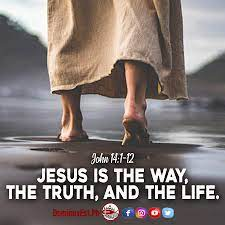
What we can admire, first of all, in the Gospel is Jesus’ delicacy. He wished that the disciples' hearts should not be disturbed. The Passion was close. Jesus knew that this event was going to cause a great upheaval for the disciples, but he took care to preserve them from a prolonged disturbance, and said: Let your hearts not be troubled. Have faith in God and have faith in me too. Then Jesus showed his delicacy in the way he spoke of his passion, of the paschal mystery. It is a tragic, shocking mystery, but he presented it with familiar, simple, attractive images: I am going to prepare you a place in the Father's house; when I have gone and I have prepared a place for you, I will return and take you with me, so that you too may be where I am. It is a nice thing for Jesus to prepare a place for the disciples. But how will he prepare it? He will prepare it, precisely, through his sufferings, passion and, of course, his resurrection. Here we can understand that the place that Jesus prepares for us is in his tortured and then resurrected body. By now we are all members of his body, because he has prepared a place for us in it. We can say that the place that Jesus prepared for us is his heart. He allowed his heart to be pierced, because, in a certain sense, we could enter it, because this heart of his was given to us. We can, therefore, admire the delicacy of Jesus' love and, at the same time, his generosity, because the preparation of the place was a very expensive action for him. But an action performed with immense love. John says: After having loved his that were in the world, he loved them to the end (John 13, 1), that is, to the point of preparing a place for them. On the other hand, Jesus presented himself as the way to reach the Father. He says: About the place where I go, you know the way." Thomas asks him: Lord, we do not know where you are going and how can we know the way? Jesus replies: I am the way, the truth and the life. Again, we see that Jesus is all for us: He is the destination of where we are going, and at the same time the way by which we can reach the place. Infact, we must follow him as we follow a path and imitate him. We imitate him if we live in love, because Jesus is the way for he loves us till the end. Jesus shows generous love. This type of love is not easy to achieve. Love attracts us, but generous love frighten us, because it is costly. However, Jesus gave us the grace to go forward on this path of generous love with all the strength that comes from his passion and resurrection. Then Jesus explained that through him we can know the Father. Philip tells him: Lord, show us the Father and it is enough for us. Just as Moses asked God to show him his face, so Philip asked Jesus to show the Father. God replied to Moses: You will see my back, but you cannot see my face (Exodus 33,23). Direct revelation of God is impossible for man. But now we can see the face of the Father in the face of Jesus: Whoever has seen me has seen the Father, says Jesus. If we want to know God, we must contemplate Jesus: contemplate him for a long time, listen to him, and then follow him. In that way we know God better, and so God is revealed to us in his glory, which is a glory of love. The greatness and goodness of God are revealed to us by Jesus’ paschal mystery and his face. Jesus then told us a very surprising thing: those who believe in me, will perform the works that I do and I will make them greater, because I go to the Father. To understand this statement, one must also read the continuation of the sentence. That is, the next two verses of the Gospel: ... and whatever you ask in my name, I will do it, so that the Father may be glorified in the Son. If you ask me something in my name, I will do it. It is true that the disciples did more great works than Jesus, because Jesus limited his ministry to Palestine. In fact, only rarely did he leave there. The apostles extended their ministry to many nations; therefore, they did a broader work than Jesus. And the work of the Church continues to be a work broader than that of Jesus, but in reality the work of the Church is the work of Jesus himself, of the risen Jesus. This is how Jesus' discourse in the Gospel continues: Whoever believes in me, will do the works that I do and will do greater works, because I am going to the Father and whatever you ask in my name, I will do it, for the Father to be glorified in the Son. If you ask me anything in my name, I will do it (John 14, 12-14). Therefore, everything is the work of the risen Christ; the disciples are his instruments, provided that they pray. And all of us are called to carry out the work of Christ in a more modest but real way in our life. Every Christian has the vocation to do the work of Christ, in union with him through prayer and love. Therefore, we must have great ambitions in our lives; we must do divine works in union with Christ. In our life - family life, work life, human relationships - we must do a divine work and gradually transform the world according to the Father's plan, thanks to our prayer and union with Jesus in generous love.
All of these can be called priesthood, as Peter did in the second reading. He said to Christians:  hold on to Christ, a living stone, rejected by men, but chosen and precious before God, you too are used as living stones for the construction of a spiritual building, for a holy priesthood, to offer acceptable spiritual sacrifices to God through Jesus Christ. This is a splendid presentation of the Christian life! We are all called to cling to Christ, the living stone. The risen Christ is (as Ps 118,22 says) the stone rejected by men, which has become the cornerstone, because it was chosen, and precious before, God. In his paschal mystery he has become the living stone, which is the foundation of everything in the building. And whoever believes in Christ is also transformed into a living stone, for the construction of a spiritual temple, that is, a non-material temple, but animated by the Holy Spirit. The whole life of the Christian must become an offer to God, a priestly offer, because it is made to God through Christ. Peter calls these offerings spiritual sacrifices pleasing to God, through Jesus Christ. This is our Christian vocation: to offer spiritual sacrifices or, better still, to make spiritual offerings, because it is not about mostly painful, mortifying things, but about the normal activities of life, which are transformed thanks to our union with Christ who died but rose from the dead. The Apostolate of Prayer teaches its members to make the daily offering with this spirit, to be united with the paschal mystery of Christ. It is a question of offering our daily actions, so that our lives may be united to Christ, lived in divine charity. So, humbly, a splendid work was done, an inconspicuous work, that has a wonderful value before God.
In the first reading we saw how the spiritual building of which Peter spoke was built little by little. It is the Church. In the Acts of the Apostles we saw how difficult circumstances had helped to advance its construction. In the early Church there were Jews who spoke Hebrew or, rather, Aramaic - and other Jews who had been to the Hellenistic nations and spoke Greek. The latter are called the Hellenists. There were some rivalries between these two categories of Christians, and at some point discontentment arose among the Hellenists towards the Jews. Every day, there used to be a distribution of food for the widows, which at that time were numerous (men at the time did not have a long life). The discontentment was caused by the fact that, according to the Hellenists, their widows were neglected in this daily distribution.
Faced with this situation, the Twelve convene the group of disciples and established a division of apostolic work. They maintained for themselves the main responsibility, which is not the material one, but the spiritual one: It is not right that we neglect the word of God for the service of the canteens. The apostles must dedicate themselves to prayer and the ministry of the Word, because this is the main task of the Church. However, there were also material things to be organised. And then the Twelve propose to choose seven men of good reputation, full of the Holy Spirit and wisdom for the works of charity, Luke does not yet call them deacons, but they were, so to speak, the predecessors of the deacons in the Church. Thus this decision brought a solution to the problem that has arisen and constituted progress in building the Church. The text says: The word of God spread, and the number of disciples in Jerusalem multiplied greatly. God's grace is fruitful. Even in our day there are problems in the Church that need to be solved. The clergy cannot and should not do everything. It seems, increasingly, urgent to involve the lay faithful in the activities of the Church: not only in material things, but also in the works of charity and education. In this way, the building of the spiritual house will be able to erect and glorify God, gradually, transforming the world. All the texts of this Sunday invite us to welcome our Christian vocation with enthusiasm, confidence and courage. It is a splendid vocation. We all have our own vocation in the Church; we must do divine works in union with Christ. Everyone must make spiritual offerings pleasing to God; therefore, it must contribute to the building of the Church. Thus the peace and joy of the risen Christ will fill our hearts. +John I. Okoye
(pictures by chukwubike)

Sunday, 17 November 2019

33rd Sunday Year C, 2019

May we, through this Eucharistic celebration, obtain the graces that will enable us transform our lives so as to be worthy of God's salvation at the end time. Happy Sunday!

DOCTRINE AND FAITH
(Malachi 3,19-20a;  2 Thessalonians 3,7-12; Luke 21,5-19: 33rd Sunday Year C, 2019)
The first reading setting, Malachi 3,19-20a, is the Day of the LORD, the time of fulfilment of all God's promises and the realisation of the destiny of the world. It is the time when justice will be realised, the scales of righteousness will be balanced, the good will be rewarded and the evil punished. Initially, Israel believed that this day would be for her a time of vindication and rejoicing. However, the prophets set them straight on this matter, insisting that Israel herself would have to face God’s righteous anger. This is the scene depicted in the first reading of this Sunday. Israel would also have to pay for her sinfulness; there would have to be just recompense. On the other hand, the Day of the LORD, will rise majestically for the upright, like the sun in the eastern sky that shines forth in righteousness. The healing of this experience of God is the total reversal of the flaming destruction in store for the wicked.

The instruction Paul gives to the Thessalonians, 2 Thessalonians 3,7-12, is meant to ensure both harmony within the community and a positive reputation, recognisable to those who do not belong to the community. Paul gave his own conduct as an example for them to follow. This should not be seen as an act of arrogance or self-serving pride. Rather, he is trading on the conviction that the values of Christian commitment are not taught only by word of mouth.
They are also manifested through the witness of the lives of those who believe. Paul is saying that he has been faithful to the message he has been teaching and that the Thessalonians can learn from what he does as well as from what he says. There are implications to this for their lives as well. Just as he can serve as an example to them, they should be able to serve as examples to others. This is a very important way for the gospel to be taught to the world. It is also a measure of the authenticity of the word of the preacher. There are three lessons that Paul seeks to teach. First, he has not acted in a disorderly fashion as his behaviour has been above reproach. Second, he has not presumed upon the hospitality of others. This is an important point, because it was common for travellers to rely on the hospitality of those through whose villages and cities they passed. Paul's third lesson is found in his manner of living among the Thessalonians. He reminds his hearers that he worked long and hard so he would not be a financial burden to them. This suggests that besides the time and energy expended in preaching the gospel, he had other employment that enabled him to cover his own expenses while in their midst. He further reminds them that he, really, had a right to their support during the time he was ministering to them. However, he had waived this right for the sake of the reputation of the gospel itself. He did not want to give anyone the impression that ministers of the gospel are burden to the community. This leads him to condemn those, within the community, who have acted as busybodies rather than being actually busy. Paul counsels harsh treatment of such people. If they are unwilling to discipline themselves, then it is the responsibility of the community to discipline them. The community is told to withhold food from them. The community should no longer allow them to live off its generosity, because that generosity is then misplaced. Paul insists that if people want to eat, they must work like everyone else. Paul has offered himself as an example of this.
In the gospel reading, Luke 21,5-19, the admiration for the Temple expressed by some bystanders prompted Jesus to predict the destruction of that magnificent edifice. This Temple was, certainly, something in which the Jewish people could take great pride. This reading does not address the destruction of the Temple itself but, rather, the events that will precede it, signs that should alert the people to the impending doom. We must remember that a sign, whatever it is, points to a deeper reality, a reality that may not always be easily recognised or understood. For this reason it is often necessary to have an interpreter of the signs. Before Jesus identifies the signs, he warns his listeners against those who might appear claiming they have come in Jesus' name to interpret the meaning of the events that are transpiring. They might even proclaim, I am [ego eimi] he! Or The time (kairos) has come! {Kairos is an Ancient Greek word meaning the right, critical, or opportune moment.[1] The ancient Greeks had two words for time: chronos and kairos. The former refers to chronological or sequential time, while the latter signifies a proper or opportune time for action. While chronos is quantitative, kairos has a qualitative, permanent nature}. Jesus exhorts those around him not to follow these people. The signs themselves are demonstrations of upheaval. They include political unrest and violence as well as disturbances in the natural world, all experience people of the time believed would precede the end of the age. Once again Jesus warns his hearers. The end is not yet here. Something even more personal will transpire first. These long-expected signs portend the persecution Jesus’ followers will have to endure at the hands of the government, their friends, acquaintances, and even the members of their own families. The point is not that they will suffer-under such calamity all people will suffer. The point is that they will suffer because of the name of Jesus. In fact, the persecution (even death) they will be called upon to endure will itself be a witness to that name. It will be a testimony that fidelity to one's commitment to Jesus is a greater good than life itself. Faithful to the end, even if they are put to death they will be saved. While Jesus may be talking about the events that will precede the actual destruction of the glorious Temple and the beloved city within which it stood there are elements in his discourses that suggest eschatological dimensions of his teaching. We have to bear in mind that signs are often understood as pointing beyond this world to the next. We must also remember that Jesus is describing these horrors at a time when the Temple stood in all its glory. Only he knew what would transpire in the future, and he was preparing his followers for that future.
This Sunday we focus on the complex eschatological meaning of end-time. It has already dawned through the death and resurrection of Jesus, but it has not yet unfolded completely. There is an already-but-not-yet dimension of the end ­time. We believe we are living in the end-time, but are we at the beginning of it? In the middle? Or at its end? Some millenarians (millenarianism is the doctrine of or belief in a future (and typically imminent) thousand-year age of blessedness, beginning with or culminating in the Second Coming of Christ. It is central to the teaching of groups such as Adventists, Mormons, and Jehovah's Witnesses) insist we are at the end, and the manner of life they preach reflects this belief. All we have are only hints about the character of the Day of the LORD, the role God will play at this time, and our manner of living as we await the unfolding of the end-time. The Day of the LORD was believed to be the time when God would come in majesty and power to set all things right. The good would then be rewarded and the evil would be punished. In order to set things right, the distorted order of sin and unrighteousness that held sway would have to be overturned. This explains the disruption and turmoil that is always described as preceding the day of final fulfilment. Malachi describes it as a blazing fire that will consume whatever opposes the will of God. Jesus describes this disruption in greater detail. As he envisions it, both human society and the world of nature will, first, have to endure the upheaval so that they can then be transformed in the age to come. We must remember that these descriptions are metaphoric or symbolic in nature. As with all metaphors or symbols, we miss something of their profound meaning if we merely understand them literally. Belief in the Day of the LORD is a way of testifying to our faith in the righteousness of God. Although, the narrative readings for today concentrate on the disruptions that will accompany the coming of God, they also contain hints of the salvation that will finally arrive. Malachi speaks of the sun of justice that comes with healing rays; Luke promises that the faithful disciples will escape without a hair of their heads being destroyed. Just as the descriptions of the upheavals should not be understood literally, neither should these descriptions. It may be that the faithful followers of Jesus will suffer terrible agonies. The point here is that even in the midst of their pain, they will be protected. Just as the reason for the disruption is the offended righteousness of God, so the ground of their hope of protection is the same righteousness of God. 
The healing rays of justice and the rescue of the lives of the upright are references to salvation. God does not come at the end to condemn but to save. Furthermore, the suffering that precedes the end is intended for purification and refinement, not punishment. Christians are exhorted in this end time to upright living, that is to say, to live in this end-time with patient endurance of difficulties. They are instructed to carry their fair share of the work of the community lest they become a burden to others within the community or to the community as a whole. They must work diligently and conscientiously, awaiting the final coming of Christ without ever knowing precisely when that will be. Since both human society and the natural world will pass through the crucible of refinement, both human society and the natural world will be transformed. As the readings of last Sunday pointed out, Christians can enable this time of transformation to dawn by living transformed lives now. The suffering they will endure as a result of this way of living will act as the purifying fire that precedes fulfilment, if they persevere in this, they will secure their lives. May we, therefore, obtain in the Eucharistic celebration of today the graces that will enable us live transformed lives so as to be worthy of God’s salvation at the end time, Amen! 
+John I. Okoye
(graphics by chukwubike)

Saturday, 26 May 2018

Solemnity of the Most Holy Trinity 27/05/2008


May your Baptism in the name of the Father, of the Son and of the Holy Spirit be fully verified in your life of love to your needy neighbours as true sons and daughters of God. Happy Solemnity of the Most Holy Trinity! +John I. Okoye
DOCTRINE AND FAITH
(Deut, 4,32-34.39-40; Rom, 8,14-17; Matthew 28,16-20; Solemnity of the Most Holy Trinity)
            We begin our reflection on the mystery of the Blessed Trinity,  the solemnity which we celebrate today, by bringing to mind the words of Jesus in today’s gospel reading: All authority in heaven and on earth has been given to me. Christ did not only receive immortal life through his victory over death but also the dominion/lordship of the universe. He has power over everything. He received this power from God the Father. This power is unlimited and embraces all things and is exercised both in heaven and on earth. All things that appear in heaven and on earth depend on Jesus and are under his control. Life and salvation of the people are in his hands. It is only when people recognise him as their Lord, that they will be able to reach their salvation. Having, therefore, the full possession of universal power, Jesus gives directives for universal mission: Go, therefore, make disciples of all the nations. As the Lord of all the people, he sent disciples to all men. No people, persons or generation of peoples are excluded from this commission. Jesus’ appeal should reach every one; all should be able to know him. In his activity, Jesus did not use force to get people to follow him; he simply disseminated his message and called disciples to follow him freely. The disciples should now continue his work in the same way; without using force but through their word and their exemplary lives, with the power of the Holy Spirit and strengthened by the continuous presence and the powerful assistance of Jesus. It is true that they do not see him visibly, but he never abandoned them and continues to be by their side: And know that I am with you always; yes to the end of time.
            Being a disciple means living one’s life according to Jesus’ example. The disciple should be able to win people to this type of life which consists in communion of life with Jesus and in following him. We cannot be disciples of Jesus, and therefore Christians, if we  remain far from him. We are disciples of Jesus only when we live in close communion with him. We cannot belong to Jesus, if we welcome only part of his messages, doing so according to our tastes and moods; we belong to him if we allow him to indicate the way to communion with him. We become complete disciples through baptism: Baptise them in the name of the Father and of the Son and of the Holy Spirit. Baptism is not just an exterior rite as the words of baptism are not exterior formula. In baptism what is symbolised in the rite and which are expressed through words is realised: we become immersed, we are completely inserted in the realm of power, protection and life of the Blessed Trinity.
            The essential nucleus of Jesus’ message is seen in his message about God. Jesus reveals God as Father, Son and the Holy Ghost. Jesus lives among his disciples the life of the Son of God with the full knowledge of love of the Father, with an unlimited confidence/trust in the Father and unconditional obedience to him. God recognises him as his Son (John 3,17; 17,5) and the disciples could confess him as the Son of God (John 14,33; 16,16). Jesus accomplishes his work with the power of the Holy Spirit (John 3,16; 12,18). Through him, the Father is recognised as the Father, who is equal to him. The Father and Son are  linked to themselves with an extraordinary mutual understanding of love and knowledge.
            The Old Testament recognises God as the creator of heaven and earth and all that are in them. In this perspective, all around God are all his creatures and all of them are essentially and infinitely different from him. There is none among his creatures with whom God can enter into communion. But with Jesus, his Son, this is possible and both of them are united by the Holy Spirit in divine love of mutual knowledge, understanding and in a communion of fullness of life and equality. We are baptised in the name of this God who is in himself communion. Baptism places us under his protection and under the power of this God. Through baptism, God has inserted us among his own beloved ones, we belong to him. Through baptism, we are lifted unto the family of God, we become sons and daughters of God. God who lives in himself the intimate and familiar communion of the Father and Son, welcomes us in this communion.
            With the instruction: Teach them to observe all that I have commanded you, Jesus notes that following him and living in communion with the Trinitarian God, will not be realised anyhow. We cannot wish to be linked to God and live in communion with him and at the same time despise his will and serve other gods in various ways. Jesus indicated to his disciples that doing the will of the Father is a necessary condition for communion with the Blessed Trinity. The disciples of Jesus have the responsibility to instruct, in this regard, all those who come to know Jesus through them and who through baptism will be welcomed into God’s family.


            The risen Jesus reveals himself to his disciples as the Lord of heaven and earth. He does not command with force but wishes to win for himself, through the apostles, all people. Jesus appeared to his eleven apostles as one who received from God the Father full power over heaven and earth. He gave them the duty of universal mission: all people of all generations are destined to become disciples of Jesus, accept the revelation of God  from him and order their way of life according to his teachings. Central to the work of Jesus is the revelation of God the Father and the Son and the Holy Spirit, the revelation, that is of God who in himself is communion and love. The disciples participation in this divine life commences through baptism, is brought into maturity during life and will be perfected in the eternal life. May our participation in the communal life of the Holy Trinity therefore, help us to show active love to one another especially to our needy brothers and sisters. Happy celebration of the Solemnity of the Holy Trinity! +John Okoye

(PIXTURES  BY CHUKWUBIKE )