Sunday, 22 March 2026

Fifth Sunday of Lent Readings of the day: Ez 37:12-14; Ps 129 (130); Rom 8:8-11; Jn 11:1-45.


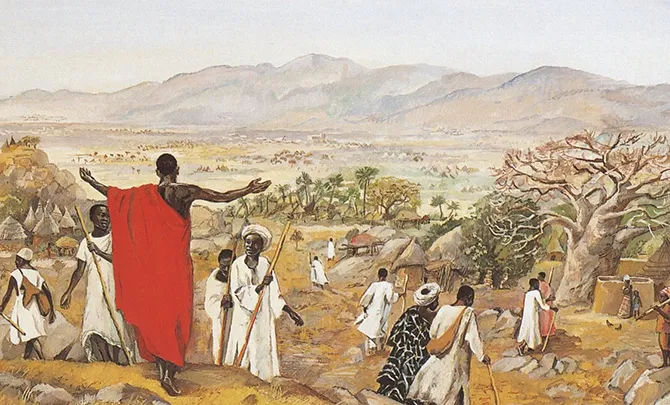
The prophet Ezekiel carried out his ministry among the exiled in Babylon. In 597 BC, Jerusalem surrendered to the Babylonian army, and King Jehoiakim was deported to Babylon along with the most important people of the city. Among the deportees was also Ezekiel.


At first, the exiled maintained an unshakable trust in God and in the destiny of the people. Jerusalem will not be destroyed, they thought; the exile will be only a brief interlude (a just but temporary punishment from God), and soon they will return to their homeland. But then, faced with the new defeat of 586 BC, and with the destruction of Jerusalem, their illusions were shattered and despair set in. It is precisely to this very dangerous state of mind that the first lines of our passage (cf. 37:12-14) refer: "Our bones are dried up, our hope is gone, we are lost" (v. 11). But no, the prophet replies in the name of God: "I will open your graves, I will raise you from your tombs" (v. 12). The entire passage is based on this contrast: on the one hand, the despondency of the exiled (We are lost), on the other, the word of God ("I will open your graves”): the purpose is to bring the people to a turning point, a reversal of trust.

The situation of the people in exile is described by the prophet in the form of a vision: The Lord [...] set me down in the plain that was full of bones; he made me pass along among them on every side. I saw that there were very many [...] and all of them were dried up (37:1-2). A humanly hopeless situation, comparable to death, such as to push the exiled to conclude: "Our hope is gone, we are lost." It is a dangerous state of mind: from discouragement one inevitably passes to disengagement.

What's the point?, they say. And they give in. This is precisely what happened to the dispersed Jews (and not only to them): there is no more hope, it is useless to continue struggling to live a life of our own among a foreign people, it is useless, let's do as everyone else does and blend in with the others.

But is it really a hopeless situation? True believers, like the prophet Ezekiel, always answer no, because they know that every situation, even the worst, is always in God's hands. Indeed, on all those dry bones, on the disappointed exiled who had lost heart, the word of the Lord falls like a whip: "I will bring you out of your graves, my people" (v. 12). A solemn and sure word: "I have said it, and I will do it" (v. 14). However, one has to understand that, it is always and only a question of faith, or rather, everything depends on knowing how to anchor one's trust in the right foundation, that is, in the Lord. Not in a reversal of the situation at the hands of men, nor in the so-called submerged energies of the people, nor in the belief that when you fall, you can always rise again, but in the Lord. If you look around, you might think it's foolish to continue to hope. But if God is watching, then suddenly all hope is permitted again.

Even Lazarus in the tomb, as recounted in the Gospel of John (cf. 11:1-45), is the symbol of a humanly hopeless situation, a situation that Jesus, despite loving Lazarus deeply, inexplicably allowed; But the faith of Martha and Mary has not failed. Perhaps there is even a slight rebuke in their words ("If you had been here, my brother would not have died," v. 21), but faith nevertheless prevails: "I know that he will rise again in the resurrection on the last day" (v. 24). Admirable faith, and yet not yet complete; we must hope for more. Jesus responds by shifting the emphasis in two directions that then converge. The first is chronological: the resurrection of the dead is not an event of the end times, but is happening now. The second is personal: the resurrection of the dead is not a work accomplished by God alone at the end of time, but is an event that Jesus brings about. So, Martha thought: "There will be a resurrection of the dead at the end, through God"; Jesus replies: "There is the resurrection of the dead now, through Christ." Martha hoped for a distant future ("on the last day"), Jesus speaks in the present tense: "I am the resurrection and the life" (v. 25). Yes, the future, but much is already possible today: it is possible to convert, conquer our sin, build more evangelical Christian communities, initiate a process of justice in society.

Happy Sunday!

†John I. Okoye

Bishop of Awgu

 (graphics by Chukwubike)

Sunday, 22 February 2026

Doctrine and faith First Sunday of Lent Gen 2:7-9; 3:1-7; Ps 50 (51); Rom 5:12-19; and Mt 4:1-11


The passage of Genesis (cf. 2:7-9; 3:1-7) contains at least three teachings that remain relevant today. Regardless of the linguistic form, it could be a passage written today.


First: Man is captured in his transience and his greatness, especially in his drama. He is taken from the earth and destined to return to the earth: thus the circle opens (cf. Gen 2:7) and closes ("You are dust, and to dust you shall return," Gen 3:19). Yet man comes from God and is loved by God: God is faithful to him; here lies all His dignity and hope. Man struggles with a seemingly irresolvable contradiction: on the one hand, there are many signs that assure us that God is good and that He created man and the world according to a wise plan; on the other, the spread of evil, violence, and death. Faced with the many forms of evil, we must not blame God, our own actions testify; the responsibility for sin lies with man. Evil has a historical origin, not a metaphysical or cosmic one; it depends on man's freedom. History is full of contradictions because man persists in wanting to create it by disobeying the Lord.

Second: Sin - that of Adam and that of all others - does not remain locked within man, but spreads outward, translating into mentalities and habits, creating culture, bonds and conditioning, fossilizing in structures. In short, there is a solidarity in sin from Adam to us. His sin conditions us, and ours, in turn, conditions future generations. And to highlight this history of sin, the first accounts of the Bible unfold according to a genealogical pattern: one sin depends on another, the sin of Cain depends on the sin of Adam, and so on.

Third: Adam's sin is not only the first sin, but also the model for every other sin. In his temptation, we see our own temptation photographed. As the dialogue between Eve and the serpent shows, the strength of temptation lies in doubting God, in believing that he imposes a law to prevent us from becoming like him (therefore, to humiliate us and preserve his privileges), rather than to prevent us from dying (that is, for our own good). The temptation lies entirely here: believing that God's law is alienating and that man lives better outside of it. A very current temptation that seems to describe - in a sort of prophecy - the mentality of modern man, who, in obedience to the Lord and listening to his word, fears diminishing himself, losing freedom and autonomy. It is not for nothing that many people try to present atheism as humanism. And yet, the opposite is true, says our passage, which is both the fruit of revelation and experience: when man transgresses his limits and poses himself as a master, and wants to build a story on his own, it is then that freedom is lost and violence is generated, and man is reduced to an instrument.


The temptation of Jesus (cf. Mt 4:1-11) that we find in the Gospel essentially re-proposes the same temptation of Adam. On the surface, the temptations are many, but at the root there is always only one: To follow the messianic path indicated by God (the way of the cross) or to choose one's own path according to the judgments of men (the path of prestige, success, dominion)? Twice (v. 3 and v. 6) Satan addresses Jesus, saying: "If you are the Son of God..." For Jesus, being a son is expressed in radical obedience and total dedication to the Father. For Satan, however, being a son means being able to use divine power at one's own will and for one's own glory. Unlike Adam, Jesus chose obedience, thus also showing us the path of return.


In perfect contrast to Adam's attitude, Christ's final response to the tempter is: "For it is written, 'You shall worship the Lord your God, and him only shall you serve'" (v. 10). It is a response that every man must make his own. And let no one forget Satan's sincere admission: "All these things I will give you, if you will fall down and worship me" (v. 9). It is true: all those who abstain from God to do things alone and to set themselves up as masters of the world are in reality forced to worship Satan. They do not want the true Lord and find another, tyrannical. A tyrant who has many names (money, success, power), but only one face: he is against man.
Happy Sunday!

†John I. Okoye
Bishop of Awgu

Sunday, 8 February 2026

DOCTRINE AND FAITH Fifth Sunday in Ordinary Time


DOCTRINE AND FAITH 

Fifth Sunday in Ordinary Time

READINGS OF THE DAY: Is 58:7-10; Ps 111 (112); 1 Cor 2:1-5; Mt 5:13-16


The prophetic passage of Isaiah (cf. 58:7-10) takes a stand against a religiosity based entirely on rites and practices and devoid of any concern for humanity. The inspiration comes from the practice of fasting, which was required on certain days and on certain liturgical occasions.


But God wants something else, insists the prophet, meticulously listing three times the behaviours that constitute true fasting, the kind that pleases the Lord. One might object that our current situation has profoundly changed from the one that gave rise to the prophet's polemic; ours is no longer the time of frequent fasts, numerous ritual practices, and frequent prayers offered for ostentation. However, if the prophet's polemical framework has lost its relevance, the most important core of his discourse has not: what pleases God is your good attitude toward your fellow man or woman. This is the core of the prophet's discourse, which retains its modernity intact. The God of the prophets never ceases to amaze us: rather than being concerned primarily with what his faithful do for Him, this God is concerned first with what his faithful do for other people.


Among the concrete ways of helping others, two are closest to the prophet's heart. The first is "untying the chains," breaking the yoke of oppression, restoring freedom to prisoners - in a word, liberation. Certainly, the prophet here reflects the experience of Israel, which in exile understood the meaning of the lack of freedom. Helping individuals and peoples to regain freedom is more pleasing to God than practices of personal mortification. The second is sharing one's bread with the hungry. The prophets know well how hunger can humiliate a man. Liberation from slavery and the fight against hunger are the two things the God of the prophets expects of his people. Indeed, he is a God concerned about the ever-growing multitude of the disinherited, and he speaks of them to anyone who comes to the temple to meet him.


In the Gospel (cf. Mt 5:13-16), the two comparisons used by Jesus - the disciple must be like "light" and like “salt” - are clear and should be taken in their literal sense. The brief discourse is addressed to the group of disciples (the verbs are plural), not to the individual. Being salt, being light must apply to the group, to the community, and not simply to individual Christians. The discourse is therefore addressed to the entire community.


The two images (salt and light) are expressed in the indicative form ("you are"), and this shows a fact, a reality: Jesus affirms, with great force and simplicity, that the disciples must be a point of reference, of purification, of transformation, under penalty of complete uselessness (for what good would salt have served if it becomes tasteless, or of what use is a hidden light?). If the disciples lose the strength of the salt that should be always in them, they are useless ("thrown out") and even despised ("trampled underfoot”).

But what does it mean, then, to be salt, and to be light? And what are the concrete good works to be displayed, or good works capable of inducing men to glorify the Lord? The prophetic reading comes to our aid once again, which agrees with the Gospel in its response: breaking chains and sharing bread with the hungry, these are the works to be displayed to the world, works capable of inducing men to glorify the Lord and capable of transforming those who perform them into a light that illuminates and salt that gives flavor, that is, into a point of reference that attracts, stimulates, and encourages.

Happy Sunday!

 †John I. Okoye

Bishop of Awgu


Sunday, 25 January 2026

THIRD SUNDAY IN ORDINARY TIME 25/01/20326


Doctrine and Faith

THIRD SUNDAY IN ORDINARY TIME

READINGS OF THE DAY: Is 8:23-9:3; Ps 26 (27); 1 Cor 1:10-13,17; and Mt 4:12-23

 The Gospel of Matthew begins the account of Jesus' public life (cf. 4:12-23) by reporting a seemingly simple fact, but which in reality constituted a great surprise, if not a scandal, for the religious expectations of the time: "Jesus withdrew to Galilee and went to live in Capernaum" (vv. 12-13). It was logical to expect that the messianic announcement would come from the heart of Judaism, that is, from Jerusalem, but instead it came from a region generally despised because it was contaminated by paganism ("Galilee of the Gentiles"). But precisely what is surprising for Matthew is the fulfillment of an ancient prophecy contained in the book of Isaiah (cf. 8:23b-9, 1-3).


The territory occupied by the tribes of Zebulun and Naphtali was located in the far north of Palestine, near Sea of Tiberias: Galilee, also called "the district of the Gentiles." Isaiah's oracle was probably pronounced shortly after the Assyrian king Tiglath Pileser III occupied the northern regions of the kingdom of Israel in 732 BC. These were very harsh times. The darkness and the gloom express the anguish of a lost people; the heavy yoke, the rod upon their shoulders, and the rod of the oppressor evoke the plight of an oppressed people. It is therefore to a lost and oppressed people that the prophet addresses, reminding them of the certainty of liberation. Whatever happens, there is always, the certainty that the Lord is with his people. And in a poverty so absolute that the prophet speaks of oppression as if it were already a past event: "In Naphtali he humbled the land of Zebulun and the land of Naphtali" (v. 23). The subject is the Lord, and oppression is his punishment, a consequence of the people's idolatry.

 A situation, however, not definitive, since the prophet continues, announcing the passage from humiliation to glory, from darkness to light: the contrast is stark and the transition is sudden, like when a wayfarer lost in the darkness suddenly emerges into the light. The joy is uncontainable, so much so that the word occurs four times in a single verse, and the prophet's emotion is expressed with two images and a memory: the joy of a bountiful harvest and the division of the spoils - one peasant, the other warrior - and the allusion to the "time of Midian" that evokes Gideon, who with a handful of men crushed the arrogance of the Midianites (cf. Judg. 6-7). The lesson is clear: it is the Lord who saves his people, not the strength of armies. The essential thing is therefore always one thing: trust in God. Just as in the time of Midian: "The Israelites did what was evil in the sight of the Lord," the Book of Judges recounts, "and the Lord delivered them into the hands of Midian" (Judges 6:1). But liberation is also in His hands, and His hands are stronger than our sin.

 The ancient prophecy of Isaiah is fulfilled, therefore, in Jesus' choice to begin his mission from the geographical and religious periphery of Judaism, thus breaking with every form of particularism. His message - a habitual, repeated message (“from that Jesus began to preach," v. 17) - is summarized in an extremely concise formula: the arrival of the kingdom ("the kingdom of God is at hand," v. 17) and the moral imperative that it entails ("repent"). The episode of the calling of the first disciples is set on the shore of the lake, where Jesus was walking and where the men were intent on their work. God's call reaches men in their ordinary surroundings, in their workplace: no sacred setting, but the scenery of the lake and the backdrop of the harsh daily life. Let's try to highlight the essential features of this story, which are four.

 First: the centrality of Jesus. His is the initiative ("he saw [...], said to them [...],  called them," vv. 18, 19, 21): it is not man who self-generates a disciple, but Jesus who transforms man into a disciple. The disciple, then, is not called to take possession of a doctrine, nor even primarily to live a life project, but to solidarize with a person ("Come after me," v. 19): attachment to the person of Jesus comes first.

 Second: discipleship requires a profound detachment. James and John, Peter and Andrew leave their nets, the boat, and their father; they leave their trade and their family. The trade represents security and social identity, the father represents their roots: it is therefore a radical detachment.

 Third: starting from Jesus' call, discipleship is expressed with two movements - leaving and following - that indicate a shift in the center of life. Jesus' call does not place us in a state, but on a path.


Fourth: there are two coordinates of the disciple: communion with Christ ("follow me") and a race toward the world ("I will make you fishers of men"). The second follows the first: Jesus does not place his disciples in a separate, sectarian space; he sets them on the paths of men.

Happy Sunday! 

†John I. Okoye

Sunday, 11 January 2026

Baptism of the Lord 11th January 2026


A call for discipleship: Mission of Love and Service, Model for Christians.

Baptism of the Lord

READINGS OF THE DAY: Is 42:1-4, 6-7; Ps 28 (29); Acts 10:34-38; Mt 3:13-17

Jesus' baptism in the Jordan (cf. Matthew 3:13-17) is a story of revelation: it helps us understand who Jesus is and indirectly who the Christian is. The introductory words of the prophetic oracle are crucial: "Behold my servant" (Isaiah 42:1). They indicate the object that is dear to God and which He intends, precisely, to make known to us. The subsequent sentences tell us what the servant possesses (the Spirit), the mission entrusted to him, and the style with which he must fulfill it. Each of these individual aspects deserves our full attention.

Who is the servant? In writing this word, the prophet was certainly thinking of the people of Israel (or rather, the group of pious and true believers), but he was also thinking of the Messiah. By saying "behold my servant," God wants to speak to us both about the Messiah and his people, about Jesus and his Church.
Servant: the word evokes obedience and submission, it is a mission to be accomplished not in one's own name nor in one's own style, but in dependence and on behalf of another. This is true, however, our passage multiplies the expressions to also recall another aspect, namely, friendship: "in whom I delight," "my chosen," "whom I uphold" (v. 1). Therefore, servant and more than a servant. At Jesus' baptism, the heavenly voice rightly changed the term "servant" to "son": Jesus is submissive and docile to the Father's will, obedient, but he is more than a servant, he is a son. And the same can be said of the Christian: servant and son.

The mission that God entrusts to his servant (that is, to Israel and his Messiah, to Jesus and his disciples) is described with three fundamental features. It is, first of all, a universal mission," addressed to the "nations" and the "islands." The servant takes responsibility for the entire world because he knows that his God loves all humanity. With one conviction, namely, that those far away are waiting for someone to speak to them about that God they don't yet know but who they are seeking and need.
A mission - and this is the second trait - that favors the "prisoners," so to speak, that is, the poor, the weak: it is certainly open to all, but precisely for this reason it gives preference to those who are most neglected. The servant takes on the defense of those who are defenseless, becomes an advocate for those without an advocate, becomes love for those without love. A mission, finally, whose essential content is "right." The word occurs three times, and it is a biblical word with a rich and multiple meaning, richer than the one it usually has in our languages. It indicates justice in the sense of putting things right, of impartial laws, of equal treatment for all, but it also indicates the spread of the truth and knowledge of the Lord: for this reason the servant is called "a light to the nations" (v. 6).

And all this with a style: the servant does not seek clamor, does not make loud and showy gestures, does not quench and destroy, but revitalizes and encourages; he is humble, simple, and discreet. Yet he is firm and confident: "he will proclaim justice with truth" (v. 3). The servant's style is tolerance, discretion, non-violence. It is the style of Jesus, as Matthew emphasizes in his Gospel (cf. 12:1-21), but unfortunately, it is not always the style of his followers: "James and John said, 'Lord, do you want us to command fire to come down from heaven and consume them?'" (Luke 9:54).
We have left out the most important and characteristic trait: "I have put my Spirit upon him" (v. 1). It is the root of all other aspects. And only the Spirit - is the force capable of taking an ordinary man, a mean and selfish man like all the others, and transforming him into a "servant" and a "son," joyfully aware of being loved, dedicated to a mission that goes far beyond his own personal interest. The transformation of a man into a "servant" and a "son" is a miracle: the miracle, precisely, of Christian birth and baptism.
Guided by the words of the prophet and the Gospel of Matthew, we have continually moved from Jesus to disciple, and certainly not to confuse matters: Jesus is one thing, and we are another. But it remains true that the baptism of Jesus is the model of our baptism, and that to understand who we are, we must look to him.

Happy Feast of the Baptism of the Lord!

†John I. Okoye
Bishop of Awgu

Sunday, 28 December 2025

RESPECT, HONOUR & LOVE YOUR PARENTS


Ecclesiasticus 3:2-6,12-14

He who fears the Lord respects his parents

The Lord honours the father in his children,
  and upholds the rights of a mother over her see.
Whoever respects his father is atoning for his sins,
  he who honours his mother is like someone amassing a fortune.
Whoever respects his father will be happy with children of his own,
  he shall be heard on the day when he prays.
Long life comes to him who honours his father,
  he who sets his mother at ease is showing obedience to the Lord.
My son, support your father in his old age,
  do not grieve him during his life.
Even if his mind should fail, show him sympathy,
  do not despise him in your health and strength;
for kindness to a father shall not be forgotten
  but will serve as reparation for your sins.

Sunday, 21 December 2025

DOCTRINE & FAITH 2025 FOURTH SUNDAY OF ADVENT 21sth December 2025

 FOURTH SUNDAY OF ADVENT 

Readings of the day: Is 7:10-14; Ps 23 (24); Rom 1:1-7; Mt 1:18-24.

The passage from the book of the prophet Isaiah (cf. 7:10-14) requires a few words of context. News have just reached Jerusalem that the army of Damascus and the army of Samaria have joined forces in the mountains of Ephraim and are marching against the small kingdom of Judah. Faced with the looming danger, "his (the king's) heart and the hearts of his people were shaken, as the trees of the forest are shaken before the wind" (Isaiah 7:2). But the prophet does not tremble because he knows that God is able to save his people. He goes to meet the king, who is making his way around the ramparts to inspect the fortifications, and invites him not to be afraid, to have faith, not to seek alliances elsewhere, but to trust only in the Lord. To persuade him to do this, God is even willing to give him a sign, but the king has already decided to ask the Assyrian government for protection and refuses the sign, hypocritically citing a religious reason: "I do not want to put the Lord to the test" (v. 12). The reality, however, is that the king does not have the courage to trust solely in the Lord.

It is in this precise context that Emmanuel's announcement takes on its full significance. Faced with the king's incredulity, the rebuke: "Is it not enough for you to weary men, that you now weary my God also?" (v. 13). But then comes the surprise; we would expect the prophet to continue with words of threat and punishment, but instead he continues with a word of hope: "The virgin will conceive and bear a son, and shall call his name Immanuel" (v. 14).

To the disbelief of the king and the people, God responds by promising the birth of a child who will be "God with us." Here lies the wonder of Christmas, which is also the wonder of God's love: God does not distance himself from our disbelief but conquers it by drawing close, becoming a brother to sinful men.
The evangelist Matthew recounts that Jesus was born in the most pure womb of the Virgin and by the power of the Spirit (therefore his origin comes from above), yet he is also included in a genealogy, and among his ancestors are righteous and sinners, believers and unbelievers. And this is the great consolation, the rock on which Christian hope rests, a theme that constitutes - in the light of the prophet's passages the guiding thread throughout the Advent season: despite our infidelities, despite the increasingly aggressive forces of evil, God does not cease to be Emmanuel, God with us. A simple and consoling name. God has emerged from his distance and invisibility, becoming visible and concrete, reachable. Having come among us in human form, the Son of God wants us to continue to seek him among men and to welcome him as a man. Since the Son of God became man, any other search for God is no longer possible, because God not only became man, but also remained among men.

However, there are three things we must not forget. The first is that we must not remain closed in the past. To the people of his generation, Isaiah kept repeating: "Remember not the former things, nor consider the things of old!" (43:18). It is not the past that must return. There is an attachment to the past, a nostalgia for what "once was," which prevents us from grasping new possibilities. Anyone who dreams of redoing the old ways is not a builder of hope.

Then we need the courage to admit that the situation we find ourselves in is also caused by our own personal responsibility. To always and only place the blame on others is simplistically hypocritical. In reality, the responsibility belongs to everyone, and we have the situation we deserve. Only those who allow themselves to be questioned have understood Christmas and are bearers of hope.

And finally, the man who shapes his hope on Jesus Christ knows that good and evil ultimately touch everyday events, everyday life. To believe that everything is played out where the destinies of peoples are decided is a temptation and an illusion. History will change only if every man takes his destiny, his daily world, into his own hands, renewing it. Hope rises from the base rather than descending from the top.
Happy Sunday!

†John I. Okoye
Bishop of Awgu
Awgu diocese diaconate ordination
20th December 2025

Sunday, 25 May 2025

Sixth Sunday of Easter;( 25th May, 2025)


 The truth of Jesus is understood not by observing or studying it from the outside, with an objective and impersonal gaze, but by allowing ourselves to be involved in its event and in its experience. Happy Sunday!

 DOCTRINE AND FAITH 

 (Acts 15:1-2.22-29; Ps 66 (67); Rev 21:10-14.22-23; Jn 14:23-29: Sixth Sunday of Easter; 25th May, 2025)

In these Sundays of Easter Time, we are brought back, by the Gospel of John, to the events that immediately precede the passion, death and resurrection of Jesus. The liturgy seems to want to lead us not only into the Cenacle, but into our own life, to the heart of our fears, hconfusion, and disbelief. If it is true that we believe in the risen Jesus, however, we so often experience his absence and the anguish that this distance causes in our lives. This is the atmosphere of the fourteenth chapter of which we read some verses today. Two traits characterize the spiritual climate of the discourses of the Supper; It is worth dwelling briefly on them.


The first feature is that these discourses are set in the context of a Supper, which becomes the symbol of a profound communion between Jesus and his disciples. The environment is intimate, interpersonal. We are thus reminded of a crucial dynamic of the Christian experience: the truth of Jesus is understood not by observing or studying it from the outside, with an objective and impersonal gaze, but by allowing ourselves to be involved in its event and in its experience. We know the truth if we are willing to let our life be introduced into a path, into a journey that leads us to know the mystery from within. It lets us know the truth, in the original sense of being able to savour it, enjoy it.

The second feature is the overall climate of these texts. It is marked by what John calls the disturbance of the disciples. The chapter opens with a strong invitation from Jesus: "Do not let your hearts be troubled" (v. 1). Towards the end, in the passage we hear this Sunday, Jesus forcefully repeats: "Do not let your hearts be troubled and do not be afraid" (v. 27). Several reasons contribute to creating disturbance and fear; in fact, the disturbances and fears that threaten our human experience and our faith are reflected in them. What we are most interested in observing is how Jesus reacts to the disturbance, the way in which he invites the disciples to overcome it. First of all, there is an appeal to faith: "Have faith in God, have faith also in me" (v. 1). These words resonate at the opening of the chapter.

Then, in our verses, the call to faith is followed by the invitation to remain in love. Faith and love are the foundations of the Easter experience. In an intertwining that is never divisible: faith leads to love and love nourishes faith. In John 14, many promises of Jesus resound concerning the future of the disciples: the possibility of carrying out the works of Jesus and indeed of carrying out greater ones; the gift of praying in the name of Jesus, certain of being heard and answered; the promise of the Spirit as another Paraclete who will remain with us forever; the promise of being able to welcome and remain permanently in the love of Jesus by virtue of his word that protects us if we in turn know how to protect it. The culminating promise, however, is the one we hear this Sunday: "If anyone loves me, he will keep my word, and my Father will love him, and we will come to him and make our home with him" (v. 23). Here we really hear something surprising: the chapter opens with Jesus' promise to go and prepare a dwelling for us with his Father, but then the discourse ends by reversing the image: it will be he who makes our life a dwelling capable of hosting God's visit. "We will come to him and make our home with him." We are the ones who become God's place! Jesus prepares a place for us by making us the place, the dwelling of Trinitarian love, the temple of his glory.

 Describing the future Jerusalem, the Book of Revelation tells us that "it has no need of the sun or of the moon, for the glory of God gives it light, and its lamp is the Lamb" (Rev 21:23). We must await this future fulfillment, but savouring the way in which it is already beginning to be fulfilled in us. Our personal existence, that of our communities, is already the dwelling place of God, in which that light can dwell that offers us the possibility of seeing and judging the things of all time in a new way. We understand then how vain, foolish and senseless it is to base our faith and our salvation on external signs, such as the circumcision that the Acts tell us about (cf. Acts 15:1), or other signs that we continue to invent in our times, or on human works, such as the works of the Law. Jesus' Easter gives us much more, an incomparably more beautiful and fascinating good: to remain in his love and to allow his love to remain in us, until we become the dwelling place of God.


The liturgy of this Sunday does not make us read this chapter to the end. Therefore, we do not listen to the last word of Jesus: "Rise, let us go from here" (v. 31). A paradoxical word, because in fact no one gets up and Jesus continues his speech. What meaning does this invitation have then? Perhaps we can interpret it as an exhortation to get up (a verb of resurrection!) to emerge from our fears and disturbances, from our anguish and resentment... We can and must get up: while remaining in the world, we dwell elsewhere, in that love of Jesus that manifests itself mysteriously in the secret of our life.

 + John I Okoye 

Sunday, 9 February 2025

5th Sunday of ordinary time, 9th February, 2025


 The encounter with Jesus is always personal and requires us to leave the anonymity of the crowd to meet him face to face. Happy Sunday!


Doctrine and Faith

(Is 6:1-2a.3-8; Ps 137 (138); 1Cor 15:1-11; Luke 5:1-11; 5th Sunday of ordinary time, 9th February, 2025)

In Nazareth, the rejection of men is unable to stop the journey of the word of God which in Jesus continues to be fulfilled elsewhere. Luke's story, which we listen to today, describes to us the effective fulfillment of this word in the life of Peter and the other disciples, who, unlike the Nazarenes, welcome the word of Jesus and give it credit. In fact, they have the poor heart of those who recognize themselves not only with empty nets, but even as sinners, as Simon Peter does. Or as Isaiah does, who-encountering the holiness of God-cannot help but confess his own impurity: «Alas! I am lost, for I am a man of unclean lips" (Is 6:5). On the contrary, the Nazarenes, we remember, had revealed the hardness of a rich heart because it was full of demands towards Jesus. And those who demand do not know how to trust.

The text that Luke offers us this Sunday is not just a story of vocation; it is the dramatization of what happens when the word of God releases its transforming power in the lives of those who know how to welcome it with faith. We can in fact divide the passage into three small scenes, connected by a common thread whose protagonist is the word of God which becomes flesh in Jesus. In the first scene, Jesus announces the word of God and the crowds listen to it. People crowd around his word, because they understand that it is not like other words, but is capable of giving authentic meaning to life, redeeming it from any illusion or emptiness.

In the second painting the evangelist takes us deeper. From the anonymous and impersonal face of this crowd some faces and some names emerge. The encounter with Jesus is always personal and requires us to leave the anonymity of the crowd to meet him face to face, letting him call us by our name so that we in turn can call him by his name. In particular, for Peter this personal encounter takes place through a different relationship with the word of God. Until now he has listened to it, like the others, confused in the crowd; now this word demands from him a personal and responsible decision, which only him, in his freedom and in the first person, can and must make: "At your word I will cast the nets". Jesus had used a plural: "cast your nets"; Peter responds in the first person "I will cast the nets" (see Luke 5:4-5). Now for Peter it is no longer a question of listening to the word of Jesus like the crowds do; now this word involves him personally and asks him to become the ultimate criterion of his discernment, his judgement, his action. Peter decides to trust Jesus' word and in this way he will be able to see its effectiveness: the nets, previously empty, are filled with an immense quantity of fish. Our relationship with the Lord becomes personalised, and we emerge from the anonymity of the crowd to meet him face to face, every time his word becomes for us a criterion of judgment and action, the foundation of our life; in addition to listening to it, we decide on it, even when it appears useless, ineffective, contradicted by our experience. However, Peter's story does not end at this point, there is a third scene, very short, in which the words of Jesus still resonate, which take on a new and further aspect. From a criterion of judgment and action, it becomes a powerful word that transforms Peter's life, calls him to conversion, promises him a different future, for which it offers itself as the only guarantee: "from now on you will be a fisher of men" (v. 10). After having noted the effectiveness of Jesus' word in the sign of fishing, Peter will have to find it in his own life. Just as that word transformed empty nets into full nets, so it will transform Peter's life: from a fisherman he will become a fisherman of men.

What Peter experiences is an Easter passage. It is being born into a new life; it is the passage from night to day, from empty nets to full nets, from being a simple fisherman to becoming a fisherman of men. Luke also uses the Greek term zōgreus, which means "he who captures the living", and perhaps we can understand: "he who captures men to return them to life". In the Bible the sea is a symbol of death and of every other evil that threatens the life of man. Peter's mission will be to tear men away from this sea which evokes all that is darkness, anguish, negativity - to return them to that fullness of life and joy that only the encounter with the Lord can bring about in the existence of every person. Announcing to the Corinthians the resurrection of Jesus and his revelation to the disciples, Paul goes so far as to exclaim: "By the grace of God I am what I am, and his grace towards me was not in vain" (1Cor 15:10). Meeting the Risen One, living the experience of Easter means precisely this: allowing his new life to transform our existence. The grace of Easter always fills our empty networks. We have the responsibility to welcome this gift and make it mature as disciples of Christ. The Christian life, as a vocation, is much more than the simple response to a word that calls us. It is welcoming and making effective in us the ever new grace of Easter. 
+ John I Okoye


Sunday, 15 December 2024

3rd Sunday in Advent, Year C; 15th December 2024)


 He who is near, comes to live among us: He will free our life from the weeds that compromise it, He will guard the good wheat so that it matures and bears abundant fruit. Happy Sunday!


DOCTRINE AND FAITH
(Zephaniah 3:14-17; Is 12:2-6; Phil 4:4-7; Luke 3:10-18; 3rd Sunday in Advent, Year C; 15th December 2024)

On this third Sunday of Advent, which the liturgical tradition defines as "Gaudete", starting from the Pauline invitation to always be happy, joy seems explosive and uncontainable. It is expressed first of all in the many imperatives that we hear in Zephaniah: "rejoice"; «shout for joy»; «rejoice and acclaim». "Sing and rejoice", we pray with Isaiah in the responsory of this liturgy of the Word. We have already said it: even the apostle Paul, ("I repeat it to you”) insistently urges a joy that must "always" characterize the life of believers. The vocabulary of joy today is therefore multiple and varied, it is colored with different verbs and adjectives, but its motivation is only one: the closeness of the Lord, his coming among us, his remaining among his people. “The Lord your God is a mighty savior among you,” announces Zephaniah (3:17). Paul echoes him: "The Lord is near" (Phil 4:5).
Luke's Gospel passage seems to act as a counterpoint to this joyful and sunny luminosity, which once again shows us the figure of John the Baptist, with his radical and demanding announcement: John, in fact, presents the Coming One as the one who (holds in his hand the shovel to clear his threshing floor and to gather the wheat into his barn; but he will burn the straw with unquenchable fire" (Luke 3:17). The contrast, however, is only apparent. We can even discern in these words of the Baptist the tone of promise rather than that of threat. He who comes is a powerful savior, Zephaniah announces, and his salvation manifests itself as liberation: he burns and eliminates everything in our life that is weed, chaff, straw; while he collects and eliminates, he safeguards the good wheat the soil of our existence will be able to produce.
Yes, we know it well: our life is often marked by many contradictions, which intertwine with each other to form a tangle that, alone, we cannot untangle. We too have the experience, described by Paul in the Letter to the Romans, of not being able to do the good we would like and, on the contrary, doing the evil we do not want to do (see Rom 7:14-25). We must recognize our inconsistencies, falls, inability to complete the paths of spiritual life that we design with such generosity. Here then is the happy news that the Baptist proclaims; he who is near, comes to live among us, brings with him this promise: he will free our life from the weeds that compromise it, he will guard the good wheat so that it matures and bears abundant fruit. Also, for this reason the Baptist presents Jesus as "stronger than me". If the baptism in water that he imparted was only a sign to recall the need for penance and conversion (that path of sanctification that we desire to follow but which often leaves us with the bitterness of our failures and the emptiness of our failures) the baptism in the Holy Spirit and fire will have the strength to accomplish in us what, left to ourselves and our vain voluntarisms, we are unable to bring to a successful conclusion.
Thus, John responds to the crowds who question him, and his answer goes far beyond the question, offering a deeper and more decisive look. To those who ask him: "What should we do?", John does not limit himself to indicating some signs of conversion, to be placed in ordinary life, so that the word of God and the newness of the Gospel take shape and flesh in it. He also announces that what everyone must do finally becomes possible precisely because he who comes, makes himself close to our lives with all his power of salvation. Yes, the Lord is close: he is close to our weakness with his strength, he is close to our sin with his forgiveness, he is close to our desire with his promise of fulfillment, he is close to the tangle of our inconsistencies with his word which gives order and transparency to our lives.
The announced joy then produces some fruits in us: it frees us from fear (do not fear), Zephaniah announces - since we can hope for a fulfillment that does not come from us but is given to us from above; it makes us lovable: “may your lovability be known to all”, exhorts Paul - because it allows us to be simple and transparent, no longer tangled up in our vain efforts and in our inconsistencies; It makes us people capable of hope and expectation. Thanks to John's preaching, in fact, "the people were waiting" (v.15). Joy generates waiting and waiting is filled with joy. Evangelical joy, in fact, is never just the enjoyment of what we know or what already satisfies our desire: it is always waiting for him who comes to surprise our life with a gift greater than our own hope. And it is an expectation in which our joy mixes with the very joy of God. Zephaniah, in fact, in addition to announcing our joy, reveals to us the very joy of God: «he will rejoice over you... he will rejoice over you with shouts of joy" (3:17). God rejoices over us. This is true joy, its truest and most stable foundation. We rejoice because God comes among us; but even before that, it is God himself who rejoices in dwelling among his people. Our deepest happiness lies in recognizing with amazement that God desires nothing more than this: to share his joy with us. 
+ John I. Okoye

Sunday, 23 June 2024

12th Sunday in Ordinary Time, Year B, 23rd June, 2024


The old things, the ones that scare us, are gone; behold, new things have been born: the new things of faith and hope.” Happy Sunday!


DOCTRINE AND FAITH

(Job 38,1.8-11; Psalm 106 (107); 2Cor 5,14-17; Mark 4,35-41; 12th Sunday in Ordinary Time, Year B, 23rd June, 2024)


God reveals himself to Job as the one who has power even over the indomitable powers of the sea, which in the eyes of a Jew were a symbol of everything that man could not dominate and by which he felt threatened. God, on the other hand, does not annihilate the threat of evil, represented metaphorically by the sea waves, but controls it, places an insurmountable limit on it, closing the sea “between two doors” and telling it: “You will reach this far and no further and here the pride of your waves will be shattered.”(Job 38.11). This power of God is manifested in Jesus, who is able to threaten the wind and command the sea: “Be quiet, calm down!” (Mark 4,39). We easily understand the amazement that seized his disciples and the question that arises from it: “Who then is this, that even the wind and the sea obey him?” (4.41). It is the same fear that one feels when one is placed before God and his mystery, which now transpires from the humanity of Jesus, whose authoritative word, whose powerful gestures seem to transcend human possibilities. A crucial passage in the life of faith is manifested here, very similar to that experienced by Israel at the Red Sea, when she was called to convert from the fear of the sea to the fear of God (see Exodus 14,31). In a similar way, on the boat the disciples must convert from the terror of the storm, the fruit of their disbelief, to the fear of Jesus, another name for a faith that allows itself to be questioned by his mysterious identity. The episode is narrated by Mark at the conclusion of the chapter on parables. What happens in this boat is also a parable of the Kingdom. Jesus sleeps in the stern as the seed rests in the ground. The farmer cannot do anything in this evening, however, whether he sleeps or watches, “at night or during the day, the seed sprouts and grows. How, he himself does not know” (Mark 4,27). The sower must have faith in the power of the seed, which seems inactive, but instead mysteriously releases its vitality. In the same way the disciples must learn to trust in Jesus and in his salvation, even when he sleeps. Furthermore, his ability to sleep just as “a great storm of wind broke out and the waves were breaking into the boat, so much so that it was now full” (4,37), is surprising. The disciples are terrified. We easily understand their reaction. What appears disconcerting instead is the sleep of Jesus, who “stuck on the pillow and slept” (4,38).

How can you sleep in such a situation? The disciples interpret this sleep as disinterest, to the point of waking him up with a poorly concealed rebuke: “Master, don’t you care that we are lost?” (4,38). Jesus’ sleep, however, is not so much an expression of carelessness as of trust. Even in the midst of danger he remains like a child who can fall asleep confidently in the arms of his father or mother. It is the sleep of those who know they are protected.

And it is this faith that he lives first, a faith that has already been able to convert the fear of the sea into the fear of God, and he would like to share this his attitude with his disciples. “Why are you afraid? Do you still have no faith?” (4,40). Perhaps, we must understand not so much “you still have no faith in me” as “you still have no faith in the Father, like me?”. Why, don’t you abandon yourselves too, with trust, in the hands of him who wants to keep you? Why don’t you too learn to pray like the psalmist: “In peace I lie down and immediately fall asleep, / for you alone, Lord, confidently make me rest”? (Psalm 4,9). The sea and the wind obey the word with which Jesus threatens them. However, before speaking to the wind and the sea, Jesus speaks to the disciples and then addresses their fear. He seems to want them to first overcome the violence of fear, and then also overcome the violence of the storm. As if the real danger were fear, or the disbelief from which it is generated. How not to be afraid, if life is threatened and those who can save are asleep? Isn’t Jesus’ reproach out of place, or excessively harsh? And perhaps a different reading is possible.

When we read the Gospel stories we also experience this difficulty: we focus on words, phrases, statements, without being able to immediately grasp the tone of voice, or the inclination of the gaze, or the light in the eyes of the person who said them. With what tone does Jesus address his disciples? Is it the tone of a harsh rebuke? Or rather is it the tone of someone who has compassion for their difficulty in believing? Is it the tone of someone who, rather than scolding, takes tender care of their and our fear? If poverty, smallness, fragility are places of God’s care in Jesus, even little faith, poor and naked faith, cannot help but be so. The Lord, who has mercy on us and on our lives, wants to free us not so much from a storm, but from the wrong attitudes with which we so often live in moments of crisis, confusion and danger. We are not spared from going through the storm, we are given the gift of doing so with a heart full of the fear of God rather than of fear of the moment of difficulty in which we find ourselves; with the heart of one who sleeps the sleep of a trust. By dominating the sea, closing it “between two doors” and setting “a limit” to it (see Job 38,8-10), Jesus repeats God’s creative gesture, narrated in the first chapter of Genesis. In him the Father brings about a new creation, or – as Paul reminds the Corinthians more precisely – he calls us to become “a new Creature”. The old things, the ones that scare us, are gone; behold, new things have been born: the new things of faith and hope (see 2 Cor 5,17). + John I. Okoye.

(Graphic by Chukwubike)


Sunday, 9 June 2024

Sunday of Year B, 9th Jun


God always wants to forgive us, thus it is necessary to seek Jesus and his forgiveness not by remaining outside, but by entering with him into his own way of listening to the word of the Father, of loving his will, of recognizing it as a desire for salvation and good for us and for everyone. Happy Sunday!


DOCTRINE AND FAITH
(Gen 3, 9-15; Psalm 129 (130); 2 Cor 4,13-5,1; Mark 3, 20-35; 10th Sunday of Year B, 9th June, 2024)

“The serpent deceived me and I ate” (Gen 3,13). This is how Eve responds to God who asks her to account for her and Adam's behavior. The behavior of the serpent is a double deception. The first consists in the suspicion he casts on God and the prohibition against eating "from the tree that is in the middle of the garden" (Gen 3,3). In God's intention, this prohibition safeguards life, as it allows it to breathe in the logic of gift. A single "no" is imposed so that Adam and Eve can understand that everything else is a "yes" said to their happiness. Only one fruit is forbidden to allow them to recognize that all the other fruits are given, and given twice: once because they were created, a second time because they are not forbidden. Adam and Eve, however, do not understand what Paul writes to the Corinthians: "everything is for you" (2 Cor 4,15). If there wasn't that one "no", men and women could delude themselves that everything is their property and their right.  That single "no" reveals that, on the contrary, everything is a gift, and that life matures to its fullness when it is not based on the dynamics of possession, but on that of the gift. Life expands and comes true when we anchor it not to the need to voraciously appropriate what we need, but to the trust (which is a name of faith) with which we wait to receive it freely from him who gives it. The serpent's deception consists precisely in subverting this logic by casting suspicion on God: he does not wish to generously give you life, on the contrary, he wants to jealously retain it for himself, suffocating it under his dominion and control. Obedience to his Word will make you slaves rather than free; if you want to be free as God is, you must disobey his command. And so the man and the woman find themselves naked and feel ashamed, because they have interrupted that relationship with the Giver which allowed them to exist in peace and joy. They have shed off the relationship of trust to put on the shameful robe of suspicion, which always throws us into loneliness. And now the second great deception of the serpent, more dangerous than the first, creeps into their story. “I heard your voice in the garden; I was afraid, because I was naked, and I hid myself" (Gen 3,10). Adam hides because he misunderstands God's approach, imagining that he is coming to punish him, rather than to show him mercy. The serpent continues to cast suspicion on God, preventing Adam from recognizing the truth of his face and from understanding that "with the Lord there is mercy / and great with him is redemption" (Ps 129,7). The psalmist hopes in the Lord and waits for his coming more than the sentinels for the dawn; instead, Adam and Eve despair and flee from his presence. This is the serpent's most serious deception: to induce us not so much to disobey the word of God, but to bear the consequences of our sin with desperation, rather than with hope. Having the fear of the Lord, truly knowing him and preserving the authentic meaning of the relationship with him, means instead experiencing his forgiveness: "with you is forgiveness: / so we will have fear of you" (Ps 129,4).

There are many ways in which the ancient serpent continues to deceive our lives with his lies or half-truths. We encounter another example in the episode narrated by Mark. Jesus heals and frees from evil, yet there are still those who continue to cast suspicion and instill doubt: "This man is possessed by Beelzebul and drives out demons through the chief of demons" (Mark 3,22). Jesus unmasks the absurdity of such an accusation, since Satan cannot rebel against himself, yet there are those who continue to consider Jesus as someone who is "out of his mind" (Mark 3,21), a demoniac, rather than recognizing him as the manifestation of the finger of God. It seems unlikely, yet this is often our experience: we are so blind that we are not able to discern the gifts of God that make us live. We demand signs without recognizing those given to us. This is blasphemy against the Spirit: believing the serpent who is a liar instead of the Spirit who is the fulfilment of all God's gifts for our lives. This sin, Jesus adds, "will not be forgiven forever" (Mk 3,29). The problem is not with God, as if he did not want to forgive us, or decided not to. The problem is ours: if we do not recognize his forgiveness where it is offered to us, we will not be able to find it elsewhere. God always wants to forgive us, but if we do not know how to welcome his gift where it is given to us, where can we find it?
It is necessary to seek Jesus and his forgiveness not by remaining outside, as his mother and brothers initially did, but by entering with him into his own way of listening to the word of the Father, of loving his will, of recognizing it as a desire for salvation and good for us and for everyone.
Then, remaining within this space of the intimate relationship with Jesus, we will be able to answer God's question: "Where are you?" (Gen 3,9). We will be able to stand naked before God, in the truth of our life, but without shame, because we will know we are loved, forgiven, saved. Then, and only then, will the serpent's venom no longer harm us and we will be able to live in the hope and joy of the Spirit. + John I. Okoye.


Sunday, 26 May 2024

Solemnity of the Blessed Trinity, Year B, May 26, 2024


“Believing in a Triune God means believing in a hospitable God, who welcomes us and allows us to dwell in the communion of his love.” Happy Sunday!!!

DOCTRINE AND FAITH

(Deut 4,32-34.39-40; Psalm 32 (33); Romans 8,14-17; Matt 28,16-20; Solemnity of the Blessed Trinity, Year B, May 26, 2024)

“I am with you always, until the end of the world” (Matt 28,20). The great promise of Jesus, with which the Gospel according to Matthew ends, resounds again this year in the solemnity of the Most Holy Trinity. It is good for us to listen to it, for at least two reasons. First of all because there is a word of consolation in a time of crisis and confusion. Jesus addresses it to the disciples who, after having all abandoned him, are reunited again by a word of forgiveness and peace, now offered to them freely. The evangelist writes that, “when they saw him, they fell prostrate. But they doubted” (28,17). The contrast between these two verbs outlines a Church that is still relevant today. The faith that prostrates itself in adoration, the faith that doubts. The Christian community has always been like this, and it is precisely to a community like this that the Risen One promises his presence: I will be with you, who are at the same time capable of adoration and of little faith.

In addition to consolation, the word of the Risen One is a word of judgement, which requires discernment. I am with you. His way of being remains with us, continuing to judge our life and calling us to conversion. What are the signs of transformation that the love of the Father, the grace of the Lord Jesus Christ and the Spirit of communion wish to bring about in us? The word of God that we hear this year helps us to focus our gaze on at least three fruits of this Trinitarian action in our personal and community existence.

Deuteronomy reminds us that the first fruit is listening to the word of God. “Was there ever such a great thing as this?”, asks Moses, “that a people heard the voice of God speak and remained alive?” (Dt 4,32-33). We too, like Israel, can listen to the word of God and remain alive; that is, we can listen to the word of God and find in it an inexhaustible source for our life in order to live well and to achieve a happy, fulfilled life.

The second fruit reminds us of prayer about which Paul writes to the Romans. We too have received the Spirit through whom we cry: “Abba! Father” (see Rom 8,15). We can pray to God and call him Father in the mentality of children. Only Jesus can truly say: “Abba”, but by abiding in the love of the Trinity we can also say: “Father”.

The third fruit, given to us by Matthew, is discipleship: "Go and make disciples of all nations" (Mt 28.19). We are disciples and we are sent by the Risen One to allow others to become disciples in turn, like us.

These three fruits qualify our remaining in the name of the Father and of the Son and of the Holy Spirit. They identify our being a Christian community that dwells in the Trinitarian communion. They give us three fundamental attitudes to live in our own community relationships, whether in a religious community, or in a family community, or in a parish community. By listening, we mean, the ability to welcome and to take care of each other; truly listening is not only listening to the words that the other says to me, but also to his need, his desire, his effort, his hope. Prayer, helps me in recognizing that I need not only God, but also others, the brother of my community, my father, my mother or my son. Praying to God should educate us to live in trust not only towards the Father who is in heaven, but also towards one another. Finally, being disciples means living in the awareness that until the end of our lives we always need to learn from each other, because no one is enough in himself/herself and everyone must look at the other as someone from whom he/she can receive something and who in turn can donate something. They are three very simple, everyday dimensions, which however, if lived with sincerity and coherence, can truly change the life of a community, a family, a parish. And they can allow us to say truthfully: we are gathered in the name of the Father and of the Son and of the Holy Spirit.

Believing in a Triune God means believing in a hospitable God, who welcomes us and allows us to dwell in the communion of his love. We (Matthew reminds us again) have been baptized in the name of the Father and of the Son and of the Holy Spirit, and by virtue of the baptism received we live every moment of our lives immersed in the love of the Father and of the Son and of the Spirit. We are in God. We live in God. And in the space of this love we are never cramped, it is a very large and hospitable space, in which there is room for everyone; from which no one is excluded or prevented from entering. Jesus reminds us clearly in the Gospel of John: “In my Father's house there are many mansions. If not, would I have ever said to you: "I'm going to prepare a place for you"? When I am gone and have prepared a place for you, I will come again and take you with me, because where I am you may be also” (John 14,2-3). Jesus wants us to also live where he dwells, that is, in the love of the Father and in the communion of the Spirit. Obeying the word of Jesus which is given to us today by Matthew, going to all the peoples of the earth to baptize in the name of the Father and of the Son and of the Holy Spirit means precisely this, going and announcing this beautiful news to everyone: we can enter and dwell permanently in the love of God. + John I. Okoye.

(graphics by Chukwubike)