Sunday, 14 May 2023

6th Sunday of Easter Year A, May 14, 2023

 
We pray in this holy Mass that the Holy Spirit who is the fulfillment of all promises leads us into fullness, by making us walk in love, in an inexhaustible circle. Happy Sunday!

DOCTRINE AND FAITH

(Acts 8,5-8.14-17; Psalm 65 (66); 1 Peter 3,15-18; John 14,15-21, 6th Sunday of Easter Year A, May 14, 2023

In this Easter season, the liturgy accompanies our journey towards Pentecost making us linger over the so-called farewell discourses in John. Jesus, in the imminence of his death (which for him represents his return to the Father and for the disciples the outpouring of the Spirit), makes promises that found the future of the community. Often, the verbs in these Gospel passages are in the future. We listen to these texts after celebrating Easter and it is as if the liturgy were giving us a suggestion: meeting the Risen One in our daily life means perceiving the initial fulfillment of these promises of him, in us, and among us. It is the fulfillment of the promise, in fact, at least in a germinal way, that allows us to encounter the Risen One and to recognize him as present in our history. This was the experience lived by the disciples on Easter day, according to John's account in chapter 20.

When the Lord comes in the midst of his own, in the place where they were with the doors closed for fear of the Jews (John 2019), they will also be able to recognize him through the contemplation of the promises of the Supper, which are being fulfilled: the Lord's promise to return so as not to leave them orphans; that of being able to see him again and thus understand how he and the Father are one; the promise of peace, joy and, above all, of the Holy Spirit, which the Risen One now breathes upon them (cf. John 20,19-23).

This experience of the first disciples remains current: meeting the Risen One means savoring his promise which is fulfilled in us and among us. The promise in which all the others are unified is that of the Spirit, who (Jesus promises) will be given by the Father, who hears the prayer of the Son, so that the Spirit himself may remain with you forever (John 14,16). He is the other Paraclete, declares Jesus, suggesting that the first Paraclete is himself. John will later make this allusion explicit in his First Letter: If anyone has sinned, we have a Paraclete with the Father: Jesus Christ, the righteous (1 John 2,1). Paraclete, literally, is he who is called so close (ad-vocatus, in Latin): the lawyer, the defender, the witness in favor, the comforter, because he does not leave us alone but defends us, supports us, and encourages us in our daily spiritual warfare. The first Paraclete, Jesus, is the one who remained with the disciples for a part of their journey, because, like every human person, he was born and died within a short period and in a small portion of the earth. The Spirit, on the other hand, remains forever, updating and interiorizing this presence of the Risen One in the life of the community and of each of its members, in every era of history and every corner of the earth. In the Spirit, Christ lives in us, and we in him. Peter also recalls it, in his letter, inviting believers to adore Christ in their hearts. In the Spirit, the Risen One dwells there, And forever. In the Greek in which John writes, this expression - forever - however takes on a much different dimension. It should be more faithfully translated: He will remain with you until eternal fulfillment. It is much more, then, than a chronological indication; it expresses the fullness towards which the Spirit leads us. His is a dynamic forever; he remains in us and we remain in him, not firm, static, or immovable: we remain on a path that leads us towards that fullness which is the communion in love between the Father and the Sons, on that day you will know that I am in my Father and you in me and I in you (John 14,20).  The Spirit is the fulfillment of all promises, but he fulfills them by making us walk, and walk in love, in an inexhaustible circle. By welcoming Jesus' word, we welcome the new commandment, which allows us to be able to love as he has loved us. By walking in this love - thanks to the energy that is released from the commandment - we will love the Lord more and more, and he will return to manifest himself to us in an ever-new way, renewing his word and his commandment in us. The new word and commandment will thus return to increase our ability to love. It is a virtuous spiral that does not end. In fact - Gregory of Nyssa affirms in his homilies on the Song of Songs -: He who ascends never ceases to pass from beginning to beginning, and the beginning of higher realities never ends. It is the Spirit who is to lead us into fullness, and fullness is inexhaustible! This is the foundation of our hope (says Peter), of which we must be able to give an account to anyone who asks us. It is a foundation that does not remain external to our life but is within us. Indeed, the foundation is the word of Jesus, that commandment of him that John defines as entole, literally that which is placed within us, like a spring that gushes unstoppable. It is the water of the Spirit in which we were baptized; and the energy of the Spirit in which we have been confirmed, as Acts reminds us today; it is an ever-new beginning that continues to fulfill Jesus' promises for us and the world. + John I. Okoye.

Sunday, 7 May 2023

FIFTH SUNDAY OF EASTER, YEAR A. MAY 7, 2023


 We pray through the graces of this holy Mass, that we understand what the resurrection of Christ has done for us; making us living stones of a spiritual edifice, a holy people whom God has acquired to proclaim his wonderful deeds, and so help us to pass from darkness to his marvelous light. Happy Sunday!

DOCTRINE AND FAITH

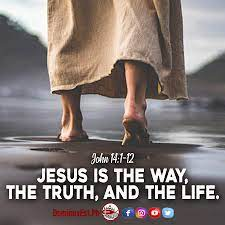
Acts 6,1-7; Psalm 32 (33); 1 Peter 2,4-9; John 14,1-12; Year A, 5th Sunday of Easter, May 7, 2023)

We have been called by God to pass from darkness to his marvelous light. Peter reminds us of this in his First Letter, stating also that this call makes us living stones of a spiritual edifice, a holy people whom God has acquired to proclaim his wonderful deeds (1 Peter 2,9). The faith that Jesus asks us to have, to overcome every disturbance and fear, has this quality, and it does not concern only him, his identity, and the Father who reveals himself in him but also tells us whom we must become, in obedience to his word and docility to the Spirit.

The liturgy today makes us listen to the first part of chapter 14 of John. It is worth recalling some verses. Jesus' words open with a great promise: When I have gone and have prepared a place for you, I will come again and take you with me, so that where I am, you also may be (John 14,3). Towards the end of the chapter the perspective is reversed: Whoever loves me will keep my word, and my Father will love him, and we will come to him and make our home with him (John 14,23). The abode that he prepares with his Passover, is within us. And we truly become God's temple and his spiritual building, as Peter affirms. Jesus is the way also in this sense: for through him we go to the Father, but always through him the Father himself comes to make his abode in us. We discover then that the truth is no longer an idea to grasp, some knowledge to possess: it becomes rather an open space in which to live, a vital environment in which to build one's home to dwell, a road on which to walk. Pope Francis often recalls this: rather than preserving doctrines, it is necessary to start


processes of maturation in the truth. For John, the truth is a person: it is Jesus, as the full revelation of the mystery of God and unveiling, equally full, of our human face. Truth is that communion of love that exists between the Father and the Son, into which the Spirit introduces us: When he comes, the Spirit of truth, he will guide you into all the truth (John 16, 13). It is as if Jesus said: the Spirit will lead you into the truth that I am, into that truth which is my communion of love with the Father: in that space, you too can live and thus find life. Paul understands well that this is the quality of authentic faith. How many times does the expression of Christ resound in his letters? Yes, because with his Easter, in the mystery of his resurrection, Jesus has become a space in which to stay, breathe, and mature to bear the fruit of life. It is the body of which we are members, the vine in which to remain grafted, the dress in which to let ourselves be covered. How can we fail to remember the cry that echoes at the heart of the Letter to the Philippians, which reveals the profound desire of his life:  to be given a place in him (Jesus Christ) with the righteousness that is not derived from Law, but that which comes from faith in Christ, the righteousness that comes from God, based on faith (Phil 3,9). Here the ancient question that starts from Genesis and runs through all the Scriptures is answered: Adam, where are you? Man, where are you? (cf. Gen 3,9). Now, we can answer, without shame, even in the nakedness of our sin: I am in Christ! This is our place, to which he, as a way, leads us, because here we find not only God's truth, but our truth, and we can truly live by it. Christ is the space of life, and Paul recalls it: dwelling in him we know the power of his resurrection (cf. Phil 3,10). Being in him, the Apostle always teaches us, sharing what he feels about him (cf. Phil 2,5). By saying to Philip “Whoever has seen me has seen the Father” (John 14,9), Jesus reminds his disciple, and all of us, that seeing him means knowing the Son, and therefore discovering a filial way of relating to the Father. Only by sharing his filial feeling can we encounter not a generic God, but the face of the Father. To know the Father it is necessary that he reveals himself in the Son (who is one with him), but it is equally necessary that we too assume an authentic filial attitude. If we remain servants we will know God as a master, certainly not as the Father. No one knows the Father except the Son and anyone to whom the Son chooses to reveal him (Matt 11,27). And the Son reveals it to us by inviting us to learn from him, to assume his yoke, no longer that of the Law, but that of the filial condition. By sharing his feelings, we can get to know the Father and become a temple of the Spirit, so that, filled with his wisdom, we can also face new situations, such as the one created in the community of Jerusalem, according to the account in the Acts. The Apostles cannot remember a clear word of Jesus that helps them to face the problem, there isn't one: they are full of his Spirit who guides them to make the right decisions. Then the difficulty or obstacle turns into a propitious occasion for the growth of the community.

May the Lord give us the same attitudes, to transform even today's problems into opportunities in which the Spirit can once again speak his words of wisdom. If we abide in him and he in us it will be possible. + John I. Okoye.

(graphics  by Chukwubike)


Sunday, 30 April 2023

FOURTH SUNDAY OF EASTER YEAR A, 30TH APRIL 2023

 
We pray through the fruits of this Holy Sacrifice, that we receive the grace to always fix the gaze of our mind and heart on Jesus, the good shepherd. It is He who will transform our life through the glory of his resurrection. Happy Sunday!

DOCTRINE AND FAITH

(Acts 2,14a.36-41; Psalm 22 (23); 1 Peter 2,20b-25; John 10,1-10; 4th Sunday of Easter, Year A, April 30, 2023)

In the heart of the Easter season, the liturgy invites us, every year, to fix the gaze of our mind and heart on Jesus, the good shepherd. More exactly, he is the beautiful shepherd, as John defines him in his account. Beautiful in the sense of an exemplary shepherd, and therefore true, reliable, credible. In Greek - the word which the evangelist rendered - beautiful is kalos, a term built on the same root from which the verb “to call” (kaleo, in Greek) comes. It is a verb on which all of today's biblical readings seem to insist.

In the Gospel, John writes that the handsome\good shepherd calls his sheep, each one by his name, and leads them out (John 10,3). And the sheep, recognizing his voice, listen to him and follow him. They can do this because they recognize that it is not only the sound of his voice that calls them but also the beauty of the shepherd, the beauty of his life. The sheep know his voice not only in the sense that they know how to distinguish it from other voices - such as those of thieves, brigands, or mercenaries -, they also know it more deeply. They listen and understand that it springs from a beautiful\genuine life that it is totally delivered\donated, like gift, in love, so that all of them could have life, and have it in abundance. In the passage that we read this Sunday, the evangelist alludes to this, but he says it more clearly only in the verses that immediately follow: The good shepherd lays down his life for his sheep (John 10,11; cf. also John 10, 15.17-18). This is the beautiful shepherd that calls the sheep and the sheep know how to listen to, recognize and follow and allow themselves to be attracted by him. He is no other than the one (as Peter recalls in his First Letter) who suffered for you and who bore our sins in his body, on the wood of the cross (1 Peter 2,21.24). By his wounds, we have been healed! Healed and transformed, this is so because letting oneself be attracted by the voice of this shepherd means, Peter insists, accepting his example and following in his footsteps. And here, in the context of this letter, the verb to call still resonates strongly: To this you were called (1 Peter 2,21), that is, to do good, even at the cost of having to bear with patience some unjust punishment (1 Peter 2,20). However, this is not just any kind of patience, much less painful or passive patience. It is rather the patience of love that continues, with perseverance, to love and to do good, even when faced with adversity, misunderstanding, and hostility, which often expose one to violence and rejection.

What are we to do, brothers? (Acts 2,37), the crowds of Jerusalem ask in the Acts. Repent … (replies Peter) for the forgiveness of your sins, and you will receive the gift of the Holy Spirit, for the promise is for you and for your children and for all those whom the Lord our God is calling to himself (Acts 2,38-39). Converting doesn't mean adjusting one's life and behavior a little. There is a more radical transformation that is required of us: to truly believe in God's promise, which preserves his desire to make us, through the gift of the Spirit, more like his Son. Receiving baptism in the name of Jesus Christ in fact means, in addition to accepting the forgiveness of sins, allowing oneself to be clothed by him, so that the beauty of his life may radiate and shine through in our existence as well. Also in Acts, in Peter's words, the verb “to call” resounds brightly as the Lord calls people to himself. (Acts 2,39). The Lord calls us to believe in this promise: in the Spirit we are given through whom we are clothed with the very beauty of the handsome shepherd whose voice we recognize and whom we follow with trust. He, John reminds us, that Jesus is not only the shepherd but also the door. In the temple of Jerusalem, there was a door designated of the sheep, through which the animals were led to be sacrificed. Now, Jesus solemnly affirms that he is the true door, but a different door, because it does not lead inside, towards sacrifice, but outside, towards communion with the Father, interwoven no longer with observances, precepts, sacrifices, yokes, and heavy burdens to carry, but with mutual knowledge in love. The shepherd calls his sheep by his name, because he knows them one by one; the sheep follow him because they know his voice. Now, it is mutual knowledge (a sign of a profound communion in love) that becomes the sole foundation of the relationship with God. And the sheep must no longer be led to sacrifice, because it is the shepherd himself who gives them life, in abundance, through the gift of his own life. It is the shepherd (no longer the sheep) who passes through the door, making himself a lamb, and a sacrificed lamb. Among the negative figures to whom Jesus controversially contrasts himself, there are not only thieves and brigands but also strangers. Now, every extraneousness that could characterize our relationship with God is demolished: mutual knowledge and communion in love are possible and are implemented in the gift of himself. The shepherd comes to give us his life and this gift, which precedes us, allows us to listen to his voice and to let ourselves be called by him, in turn giving our lives to him and to our brothers and sisters. It is in this mutual exchange, of a gift that is accepted and paid for, that we can savor life, and life in abundance for that matter, letting the beauty of him shine through. 

+ John. I. Okoye.

(graphics  by Chukwubike OC)

Sunday, 9 April 2023

Easter Sunday, Year C, April 9, 2023


We pray in this Eucharist, that the risen Lord gives us grace, so that as we have died with him through our Lenten observances, we may also rise with him at Easter. Happy Easter!

DOCTRINE AND FAITH

(Acts 10,34a.37-43; Psalm 117 (118); Col 3,1-4 (1 Cor 5,6-8); John 20,1-9; Easter Sunday, Year C, April 9, 2023)

The choice of the liturgy which offers us only the first nine verses of the twentieth chapter of the Gospel of John is surprising. The account seems to stop at the most beautiful part because immediately after it, Evangelist John will recount the meeting of the Risen One with Mary of Magdala. And this is strange, all the more so, since the Sequence of the Mass, that is sung before the proclamation of the Gospel questions precisely Mary's experience: Tell us, Mary: who did you see on the way? What is the reason for this choice?  What sense can it have for us to listen to this page which tells us about the faith of the beloved disciple, who runs to the tomb together with Peter? Both enter the tomb and see the same things, but it is only of the other disciple, the beloved one, that it is stated that he saw and believed (John 20,8). And it is precisely on his experience of faith that the liturgy invites us today to pause our gaze. After all, this disciple's experience of faith is more similar to ours than that of the Magdalene. In fact, Mary heard herself called by name, she saw the Lord, she was able to hear him. Instead, what did this disciple see? Not the Lord, like Mary, but only signs: an empty sepulcher and cloths that had served to wrap the lifeless body of Jesus, left lying there (John 20,6), or rather collapsed there, because the body they had wrapped up was gone. The disciple sees only signs, yet they are enough for him to believe.

We are in the same condition as him: we believe not because, like Mary, we have heard and seen the Lord, but only because there are signs that make us pass from disbelief to faith. Precisely at the end of this chapter, Jesus will say it to Thomas, announcing to him the beatitude of faith: “Because you have seen me, you have believed; blessed are those who have not seen and have believed!”  (John 20,29). Such is the faith of the beloved disciple, which he believes even before personally meeting the Risen One. Signs are enough for him, as long as they are seen by listening to the word of God, opening his ear to the testimony of the Scriptures, of those Scriptures which, until then, he has not even understood and which, then, he is only beginning to understand in a new way. It is necessary to listen to see, and to see in a different way.

On this page of the gospel of  John, all the characters who enter the scene, see. But their seeing differ. Mary sees that the stone had been removed from the tomb. Her seeing, blepo in Greek is a verb that indicates bodily, physical, natural seeing; seeing with one's physical eyes. Peter too, a little later, sees or rather observes the clothes placed there (John 20,6). The verb used here is theorem from which the English term theory is derived. It is a more reflective way of seeing, in which one reasons, investigates, and questions itself. It is seeing not only with the eyes but also with the head. Peter sees and reasons, but does not come to understand. To believe it is not enough to see and reason.  Finally, it is the beloved disciple who sees and whose seeing gives rise to belief: He saw and believed (Jn 20,8). Here the verb changes again; this time and now, it is seeing not only with the eyes, like Mary, or with reason, like Peter, but it is a deeper seeing, with the heart one could say. The verb orao, used to indicate the seeing of John, is used of someone who has continued to dwell in the love of the Lord and to let himself be penetrated by this love as the entire narrative of the passion shows. It is the seeing of one who preserves the word of Jesus and lets himself be influenced by it, thus remaining in his love. Deep down, both Mary and Peter and this disciple see the same things: they see signs, but their way of looking is very different. It is, however, to be noted that these three verbs of seeing are not mutually exclusive, they should all necessarily be connected. One level of meaning should give rise to a better and more profound sense. What you see with your eyes must arouse a search, a reflection, it must lead to reason, to question, to investigate. This research must in turn go beyond itself; it cannot remain only in the horizon of reasoning. It must refract and resound in the depths of our interiority, in the deepest areas of our being, where there is not only our way of reasoning but where God himself lives; where the Spirit of him offers us a different perception of reality, attracts us, and convinces us. His is an inner persuasion that we don't know exactly where it comes from, but we still feel more convincing and reliable than any other truth to which we can come by trusting only in our efforts. And then, precisely at the intersection of these three verbs, of these three ways of seeing, faith is born: one sees and one believes.


Yes, Lord, we love you; but before that, we feel loved by you with a love without measure. And we remain in this love in which everything becomes a sign. The word we have heard, the bread we break in your memory, our being gathered in the joy of Easter, our friendship, the sun that illuminates this day just as the Paschal candle has illuminated our night: everything becomes a sign of your presence, alive and resurrected, among us. Yes, Lord, we love you. And by loving you, and knowing that we are loved by you, we too see and believe. + John I. Okoye

graphics  by Chukwubike OC